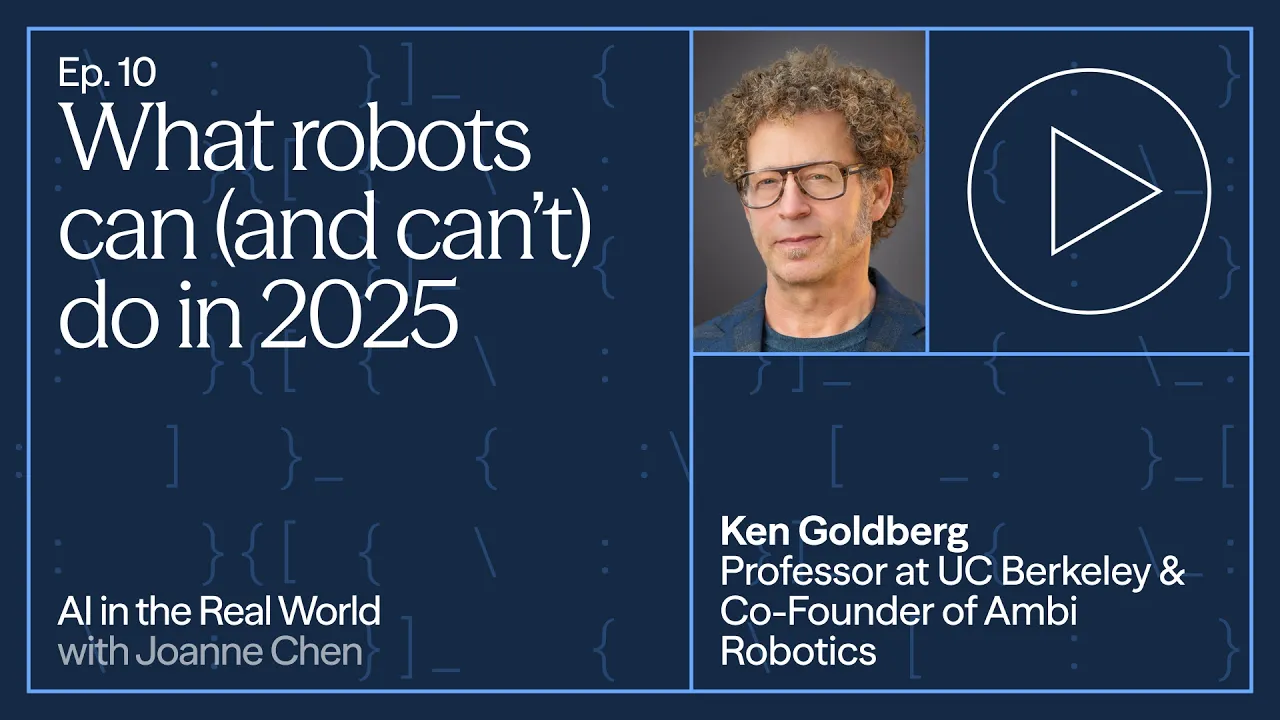
What robots can (and can’t) do in 2025

Posted

0 MIN READ
0 MIN READ

Show Outline

Ken Goldberg is a professor of engineering at UC Berkeley and the co-founder of Ambi Robotics, a company applying AI-enabled robotics to the logistics industry. Ken has spent over four decades working on one of the hardest problems in robotics: how machines perceive and manipulate the physical world. We spoke about why tasks that seem effortless to humans - like picking up a glass or folding laundry - are still incredibly difficult for robots.

Our conversation also covers:

  • What it would take to reach a “ChatGPT moment” in robotics

  • Why simulation data isn't enough without real-world grounding

  • And why the next decade of robotics depends on combining cutting-edge models with good old-fashioned engineering

Chapters:

  • 00:00 Cold open: Why robotics still needs good old-fashioned engineering

  • 03:46 Hype cycles and winters in robotics

  • 05:08 Why folding laundry is still hard for robots

  • 10:38 What robots are good at today

  • 15:00 Automation and the rise of warehouse robotics

  • 19:39 Can LLMs and generative AI work for robotics?

  • 26:52 The limits of simulation data and the sim-to-real gap

  • 29:44 Why humanoids are still far from practical

  • 36:34 What founders need to know about robotics timelines

  • 37:08 Why robots need grounding and exploration

  • 39:00 Combining the power of LLMs with traditional engineering

  • 40:42 Why Ken is optimistic about the future of robotics

Posted

0 MIN READ

Show Outline

Ken Goldberg is a professor of engineering at UC Berkeley and the co-founder of Ambi Robotics, a company applying AI-enabled robotics to the logistics industry. Ken has spent over four decades working on one of the hardest problems in robotics: how machines perceive and manipulate the physical world. We spoke about why tasks that seem effortless to humans - like picking up a glass or folding laundry - are still incredibly difficult for robots.

Our conversation also covers:

  • What it would take to reach a “ChatGPT moment” in robotics

  • Why simulation data isn't enough without real-world grounding

  • And why the next decade of robotics depends on combining cutting-edge models with good old-fashioned engineering

Chapters:

  • 00:00 Cold open: Why robotics still needs good old-fashioned engineering

  • 03:46 Hype cycles and winters in robotics

  • 05:08 Why folding laundry is still hard for robots

  • 10:38 What robots are good at today

  • 15:00 Automation and the rise of warehouse robotics

  • 19:39 Can LLMs and generative AI work for robotics?

  • 26:52 The limits of simulation data and the sim-to-real gap

  • 29:44 Why humanoids are still far from practical

  • 36:34 What founders need to know about robotics timelines

  • 37:08 Why robots need grounding and exploration

  • 39:00 Combining the power of LLMs with traditional engineering

  • 40:42 Why Ken is optimistic about the future of robotics

Get insights directly to your inbox.

Subscribe to The Foundation for our thinking on what comes next, firsthand lessons from our founders, and guidance on building from day zero.

Subscribe to The Foundation for our thinking on what comes next, firsthand lessons from our founders, and guidance on building from day zero.