What does it take to build a $2B company? If you ask our General Partner Steve Vassallo, he’d say: start by being a misfit.
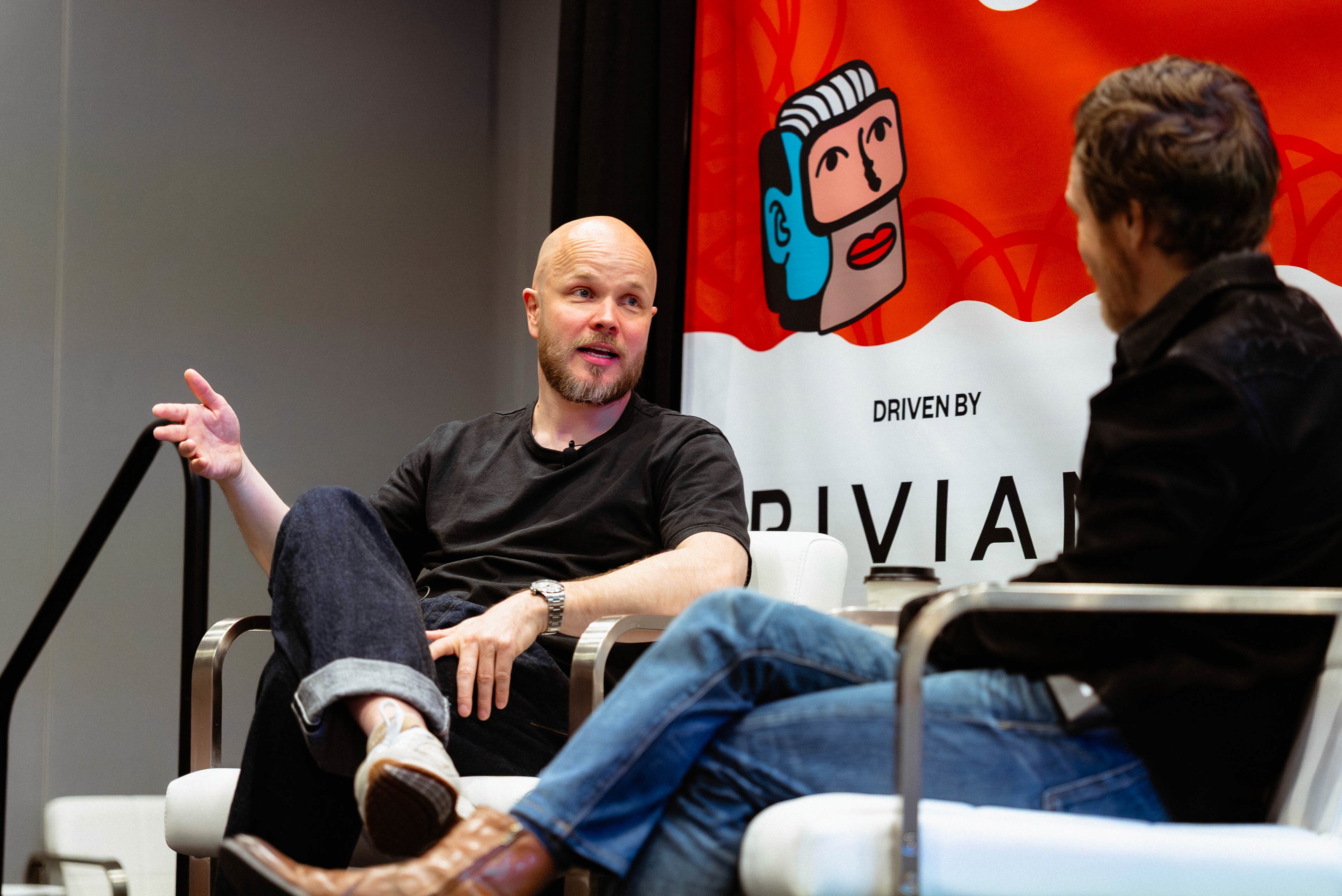
At SXSW, Steve sat down with Jorn van Dijk, co-founder of Framer, for a conversation that was equal parts origin story, product philosophy, and earned startup wisdom. Jorn's path to building Framer, a well-loved tool in the design world, ran through graphic design school in the Netherlands, a boutique studio in Amsterdam (where there’s no VC ecosystem to speak of), an Apple Design Award, and a formative stint at Facebook—little of which looks like a conventional founder biography.
Steve calls founders like Jorn "missionary misfits"—builders who cross disciplinary boundaries and uncover valuable problems precisely because they come with an outsider’s perspective. Jorn and his co-founder Koen Bok saw the friction between design and development in a way that people on either side had long since stopped noticing, and built Framer to close that gap.
Their SXSW conversation covered a lot of ground: how taste is actually developed (hint: it’s not innate), why the last 20% of any AI-assisted build is just as difficult as the first 80%, what it feels like to re-found a company that has stalled, and why that moment of reinvention is something every great company eventually has to face. Below is the video and our takeaways from their fireside chat.
00:00 – AI is already writing most of the code
00:45 – Intro: The future of design and engineering
01:45 – How AI is changing product creation
03:30 – Will design follow engineering’s AI shift?
05:00 – The “80% problem” with AI tools
07:00 – What is “taste” and why it matters more now
10:00 – How to actually develop taste as a builder
12:00 – Building products vs building points of view
14:00 – The rise of “missionary misfits”
15:30 – Jorn’s unconventional path into design
19:00 – Early Facebook days and lessons from scale
23:00 – Starting Framer and early traction
27:00 – The plateau: why growth stalled
30:00 – The hardest decision: pivot or stay the course
33:00 – Refounding the company (and flipping roles)
38:00 – From pivot to product-market fit
40:00 – Growth: $0 → $100M
41:30 – What it takes to scale beyond $100M
42:30 – AI’s next role inside products
44:30 – What humans still do better than AI
47:00 – The gap between AI hype and reality
49:00 – Why storytelling still matters most
51:00 – Final thoughts: building what actually matters
What we learned
AI will kill the drudgery of design.
AI hasn’t affected design as dramatically as it has engineering, but Jorn expects that to change in the next 12 months. So much of design work is manual—particularly on the web, where designers put every pixel in place by hand—and it can be an incredible time sink. Formerly manual tasks like centering a web design are an amazing use case for AI. “My hope is that AI enables a lot more people to do the part of the work that's actually the most meaningful,” he says.” Less of the pixel moving, more of the strategic choices that can make a great product, service, story, or campaign.
AI is great at the first 80%. But the last 20% is crucial.
Jorn calls it the “walkie-talkie” problem: There are times when AI tools are so good and so fast at getting 80% of the way to a product that it feels like you’re almost there. But getting to 100% is challenging and time consuming. Sometimes, Jorn says, you’re blown away by what the AI has made, only to realize you might have to backtrack to 70% to solve for the final product, or spend a whole weekend and burn through a couple million tokens to get through that last 20%.
“If that remains true,” Jorn says, “then the job of the humans in the loop is to do the last 20% right and get it to a state where products really start to click, or websites really start to work.”
It’s very similar to the “march of nines” concept in AI and autonomous vehicles. It’s just as difficult to get to 90% (reliable) as it is to go from 90 to 99% (safe).
Taste is earned.
People often argue that “taste” is the thing that humans bring that AI can’t. “At Foundation, we get a lot of pitches for taste-driven companies,” Steve says. “But no one ever defines what that means.”
To Jorn, it’s less about an innate quality than an earned perspective. If you’re building something for yourself, you realize how hard it is to build something that is actually good. “That is what you need to start getting the confidence to say, ‘Now, that's good. That is something that works.’”
One of the first things junior engineers are asked to do at Framer is to remake an asset, a graphic, or a website they’ve already made. “To recreate that thing, you have to unpack it and pull it apart to understand how it was actually made, right? Getting through that motion of doing that work will really yield great results in building up your own base for things.”
Earlier in his career, when Steve worked at the design firm IDEO, they thought less in terms of building products than building a point of view—a set of values and beliefs about the experience you wanted people to have when they were using your product. That point of view went into every decision the designers made. It’s values and frameworks like those that allow taste to scale across a company.
The people who can leverage everything AI can do are rare.
Every week, it feels there's a new model that's supposedly 10x better. But, Jorn points out, humans are often lagging behind the capability. The amount of truly great content being made with today's video models bears almost no relationship to what those models can actually do. Generating a short clip is easy. Knowing what story to tell remains genuinely hard. And finding people with the skills to do it is even harder, Jorn says. “You still need to get the audio and edit the video. If I had to double that team, I would be scrambling for six months to find people like that.”
“Human judgement is the key again,” Steve says. “What evokes the right feelings and emotions?”
Every great company has to refound itself at some point.
You can always rationalize staying the course—there's always a next feature, next hire, next marketing push. To see the plateau for what it is, you have to deliberately pull back from the day-to-day operational details. “If your average sales person can't close your average customer without needing to phone home base and get a lot of help, there's something wrong,” Steve says. “Either the market's too small, or the product’s not quite good enough yet.”
Framer met that moment in 2018. After hitting $5M in revenue, sales were flat for about a year. Morale was low. “All in all, we were just kind of stuck,” Jorn says. “We had to ask ourselves, who was using the product we built, and were there enough of those people out there? The answers were not in our favor.”
Something had to change. So, they decided to go for it and experiment with something new.
The value of intentional chaos.
With progress stalled, Jorn and Koen needed fresh perspective. So they did something extreme: They switched roles. “After four or five years, you’re stuck in your ways,” he says. “The more you're bought into a certain thing, the harder it is for you to take a step back and do something different.”
Koen took over the product; Jorn handled the commercials. They thought they might have a small MVP in three months. Two weeks in, a dozen employees saw that they were doing something different and wanted in—an early signal that the new direction might be right.
The new product launched in 2022. Eight months in, they’d gone from $0 to $1M in revenue. In year 2: $10M. Year 3: $30M.
Patience in founder-market fit pays long returns.
Foundation backed Framer at seed in 2014. The product that drove 10x growth launched in 2022. That's eight years of building a company, a major pivot, a role swap between cofounders, and now a path toward $100M+ ARR. “For me, it’s about partnering with founders who have that long term focal length, who aspire to build something meaningful and big,” Steve says. Those are values Jorn shares. People suggested he pivot to a lifestyle company. His ambition was to create something much bigger.
The old startup playbooks don't work anymore, but the fundamentals of building something of value haven’t changed.
The rules of hypergrowth have been rewritten. Triple-triple-double-double made sense in a different era; today you have AI companies going from zero to hundreds of millions in ARR in timeframes that would have seemed fictional five years ago. The old playbooks can still build you a solid business, but they won't get you to new heights of growth.
What will? To Jorn, it’s about finding a worthy problem, and building something novel around it. AI can accelerate almost everything else—research, execution, iteration, “but the fundamentals of building something of value really aren’t changing.” And as Steve puts it, the magic of a product comes when the people who use it love it so much that they start asking what mattered to the person who built it. That question—what did the person who made this actually care about?—is still entirely human.
Read the full transcript
Steve: 71% percent of designers say human judgment remains essential. That's what you just heard. I think what you would probably say is 99% of designs require human judgment. And this is, again, also happening across every element of design. So this notion that like, wow, we do matter in terms of choosing which problems to solve, caring enough to sort of bring the right level of details.
Morning, everybody. If you guys are coming, I am Steve Vassallo, General Partner with Foundation Capital based through Silicon Valley, an early stage venture firm. And I'm thrilled to have Jorn van Dijk with us today. Jorn is the co-founder and CEO of Framer, which is based in the Netherlands and which he started now 12 years ago. At some point being old is not a feature, right? You have been at the center of the design world for your entire career. You started a design consultancy, which was acquired by Facebook now. That's a little over 10 years ago. And you've been watching this sort of AI trend evolve. So I'm curious, sort of, when you look into what's happening, what do you see? What are some of the things that seem sort of obvious from a decade ago? What are some of the things that are the more surprising updates?
Jorn: Change is now the new normal and how people create products. And that is happening, I feel, in design now, increasingly rapidly as well.
So we were just talking about how engineering has changed over the last 12 months in probably the most dramatic way that I've seen in the last 20 years. That's to compare what happened to engineering to anything that happened again in the last 20 years. I can only come up with some process that everybody bought into, like, was it the way of working that shook up or made waves? But now I think, like, if I look at the engineering team at Framer, maybe 20% of all code gets written by hand. Here, under 80% is written by AI. And so the job of the engineer is starting to become more of a manager of output. And I think with design, the change that we have now seen over the last year, three years with AI, is that it's become dramatically easier to get an idea going or go from nothing to something. But other than that, I don't think most of the professional design has changed as dramatically as I've seen with engineering.
I think that is the change that we will have now, the work that I think we're going to see in the next 12 months. I think the profession of design, especially on the web, where you have full control over everything, you put every pixel in the right place by hand, I think that's going to change with AI. I think AI is in an amazing position to speed a lot of that work up. And I'm very excited about seeing how that plays out.
Steve: So do you when you zoom forward and think about this point around engineering being 80% coded by agents and 20% maybe QA or effectively reviewed by humans, do you think that is where it's headed with design and over some time horizon that looks like a couple of years or do you feel like that's there's a little bit more enduring human humanity of it?
Jorn: It's hard to really predict, and no one really knows, but I think it's going to go much faster. I think a lot of SaaS startups are trying to figure out how do we make agents work inside of our products, as is Framer. And if I had to predict, and I think that at the end of the year, designers that are creating on the internet are doing a lot less of the, you know, I need to design this breakpoint, and I need to set it up, and I think there's going to be a lot less of that work, which is interesting because that is the bulk of the work that's happening today.
Steve: The iteration and sort of small tweaks, the pixel based. So when you guys launched, there's an AI tool that Jorn and Koen launched maybe two years ago, which was a way of really automating the process of building landing pages, of which there are hundreds of millions, probably maybe more than that on the web, the ability to personalize those. It was a super cool demo feature, but even in that launch, you still had the human in the loop. So clearly there's some sense of like humans matter in some way with respect to engaging these tools.
Where do you think that is today? And I mean, obviously you've kind of had to do that at that time. I don't think the tools work, the design tools were quite good enough, but where are we at today on that specific?
Jorn: We call it the walkie-talkie problem. The walkie-talkie problem is that you start generating something with AI, and it is just so fast in getting you to 80% that the only emotion that you could feel is that you're blown away. Every month or every week that I try to build something with AI, same thing, there's a new model, try to generate something, it gets to 80% so fast and like, it's over. Have you guys experienced this?
How many of you guys? Yeah. To get into 100%. The more you talk to it, the further back you sometimes need to go. Sometimes you go from zero to 80 in like half an hour, and then you spend another weekend and you burn through a couple million tokens. At the end, you go like, I feel like it's more at 7% right now. So it's really hard to get it all the way 100%. And I think if that remains true, then the job of humans in the loop is to do the last 20% and get it to a state where products really start to click, where websites really start to work.
Steve: It's sometimes called the march of nines. Some of you guys have heard of this like 90%, 99%, 99.9%. And that last little bit of the logistic curve is to grind. Yeah, really, really hard.
Jorn: The last 20%, even if you take AI away, the first 80% of the work takes as long as the last 20%. If you spend 8 weeks getting to 80% and people start to feel like we're getting close to launch, it's like, how much time did you spend to get there? That's the time that we now need to get up.
Steve: This point around when anyone can build something, what you choose to build, and then the taste that you actually bring to what you're building matters a lot more. I want to talk about taste, because I sort of feel like this is one of those topics where people just throw out taste as if like, oh, that's the human thing.
But then don't define taste, don't really articulate what it means to have good taste. How do you develop it in your team? How did you develop it personally? I really want to unpack that, because I don't think it's something that we can really just throw away as like, hey, just go figure out a taste strategy. We see this, by the way, in a lot of pitches at Foundation Capital where like, we're tasters, but what do you mean, exactly? So I'm curious sort of, as you think about building taste, you've talked about, you and I have talked a little bit about how you built your taste, but then talk about how that becomes part of the actual organization, because you might have taste, but how does the org that is Framer also have a collective taste?
Jorn: I don't think people, I don't think you can have, you can have taste. But I think over time, I think a really important component of knowing what is good and bad is surrounding yourself in the actual work of something. So to know if something is good or bad, you can be on the outside as a reviewer, sort of like looking in, which is an example of that is a movie critic, someone that's never made a movie, but they're the consumer that just watches a lot of movies and they're able to articulate what they like, right? And that is valuable in some areas.
If you're building a product or you're trying to build something for yourself, it's much harder because you realize how incredibly difficult it is to build something that is actually good. And going through that motion of working on a problem or a solution, that is what you need to start getting the confidence to say, no, that's good. That is something that works. I feel sometimes it's the same as you grow up and figure out what to wear almost, right? Like if you're 15, you have no taste. So you don't know what to put up. So you put on some outrageous stuff. People around you that are much older will call you out and say, look, this looks ridiculous. Over time, you start to like wearing other things, you start to build up confidence that you now know you have the confidence to put on that shirt this morning.
Steve: I'm in Texas, right?
Jorn: It's a sign of your taste and the confidence you have in knowing what to pick and when to wear it. And so I think those things go hand in hand. You know, if you want to build up your own taste, then you can look at a lot of work. This is the key here. Collect a lot of things, things that inspire you, but then also try to replicate a lot of those things.
Like a lot of designers that have joined Framer, the first junior designers that we got successful in the company, the first thing that I typically asked them to do is recreate a thing that we made. So like, well, you try to make it, you go like you mean the same thing. Like, yeah, good luck, you know, try to recreate that thing. And you have to unpack it and pull it apart to understand like, oh, okay but this is actually that's how this was made. Right. Could be an asset, could be a graphic, could be a website. But getting through that motion of doing that work will really yield you great results in building up your own sort of taste for things.
Steve: So I started my career at this company called IDEO, which is a product development firm, actually along with Christine in the front row over here. And everybody knows IDEO style. Well, yeah, we know, Texas. But we used to think not in terms of building products, but building points of view. And it sounds like maybe a slightly goofy thing, but the point of view for products was really not the what, wasn't the features, wasn't the requirements, was a set of values and beliefs, and given what are the experiences and feelings that you wanted people to have when they were used to your product. And because it wasn't sort of a simple list of things, you ended up sort of being able to drive into the org a sense of like, well, if I were making this decision and I didn't know what really matters, kind of like almost like the sole character of the product, how would I make this decision? And would I want, for example, on a mechanical analog, like would I want all the screws to be the same type so that the person who's assembling this can use the same tool? And would I want to sort of feel loved on the inside in ways that nobody can see? And then it just permeates all of these decisions in a really interesting way. And in some sense, it's empowered as you work to make the right call, even when you're not looking over their shoulders.
So when they're unpacking that, as you said, rebuilding a product, they're seeing a story of what mattered to that person who was designed. That's right. Let's talk a little bit about this concept of missionary misfits. Before I do that, maybe I'll hit the next slide. And one of the things we're sharing with you guys. So Foundation last year, in fact, when I was here with Katie Dill, the head of design at Stripe, we had just launched our first state of AI and design survey and we're doing the second annual version of this. In fact, we've got, I think, 700 respondents. And the idea is to kind of like talk to design leaders and understand exactly how they're using AI. And we're not quite done with it. So the findings, I'll actually give you guys all a link at the end. The findings are still early, but we'll share a couple of these. So you'll see a survey inside here. Designers today, 92% of them are using AI weekly and more than three quarters of them are using it daily. So this is happening.
There's no question, now it's about missionary misfits. So one of the things I think is really interesting is working with founders, and we backed Jorn and Koen back in the very first seed round in 2014. We won't talk about that date anymore, I guess. But when I think about what you guys were working on and what you as individuals were, you kind of brought together this very interesting background that wasn't typical for many founders at the time. You were designers, you had run a studio. You then worked in the early days at Facebook design. I still remember Ben Bluemenrose telling me about your first few days at Facebook and how you were shaking everything up.
It was rough, it was rough in a good way. And I have this belief that like some of the most interesting founders are these folks who bring together disciplines in interesting ways. They're often trained in one area, but then they sort of leap into a different discipline and bring those kinds of deep insights into that adjacent discipline. And then uncover really new and interesting things as a result of that. And they're often just like missionaries and like we're working on big, purposeful, meaningful problems.
This is sort of you in many ways, as I thought about the sort of people who are building interesting things across disciplines. Talk a little bit about your background, how you sort of got started, how you sort of increasingly opened the aperture to the things that you were excited to do, how you go jumping across these boundaries.
Jorn: I'll start by saying I was terrible in school. I didn't really enjoy learning things that were written down, the textbooks. And so early on, my mom decided for me I should go to graphic design school, which I loved, because it got me in a state of creating and making things, from posters to doodles to whatever, just exploring creatively what could be built. I was pretty wise, so I did like a little bit of, took four years, industrial design, 3D design, graphic design, web design, interactive design. After that, I went to Art Academy, and that helped a little bit, but I found it much too vague. So it was within the Willem de Kooning Academy in Rotterdam, pretty well-renowned. But I was always trying to figure out like, okay, how do I apply some of the things that I'm being taught here? What is an application, what do I like to work on?
And I was drawn to macOS and the aesthetic of how things were created in Silicon Valley. That really, I tried to find a company in Europe at the time that was aligned with that. And that company turned out to be Sofa. So I was, for example, there, they found it three months before I joined. And we were sort of just interested in, okay, how do we do, who's doing interface design? What is that as a profession? There were very few people. It was early days, yeah, 20 years ago. And so it was very few people that were interested in that at all. There was like, in New York, there's nobody. There's nobody interested in that area. And so...
Steve: This is also, by the way, when Nokia had 45% market share with feature phones now. So they did not understand user interface.
Jorn: We built our first products honestly to keep the lights on because we had no distribution. We had a few customers that were not enough to pay for a five person team. We kind of like got clients to come to us because they looked at the products and it almost was like an advertisement. So the product itself was beautiful.
It's called Checkout. Unsuccessful, but beautiful. So we had a company like Tom Tom knock on the door and say, hey, it's an amazing product, but can you do some freelance work for us. And I'm like, yeah, yeah, sure, we have to. And that happened a few times over. And so we built another product called Versions, which was a predecessor to GitHub, I guess. And Nike became a client because of their products. And then we built another product called Kaleidoscope. And we had Mozilla show up as a client. And so all those clients for four or five years, I ran that part of Sofa, the company.
Steve: And what were you guys doing differently than other design firms at that time? Because this is, again, a while ago, and this was the early days of really responsive interfaces.
Well, probably early days of iPhone, iPad, and just launch. But like, what were some of the things that you got that nobody else did?
Jorn: Obsession with user behavior. And the aesthetics that were needed at the time were very few. Like if you think back 20 years ago, then some of the work that was done on Aqua and macOS, pretty revolutionary. Like next to that, it was like, well, you were doing print. Like, you did some weird stuff on the web, but people didn't really think of it as, I'm designing something on the web, it was more like I'm tinkering with Ghost to get a HTML CSS thing going. And so there's very few people that were thinking about interfaces as these sort of like experiences for people to click through and do achieve things.
Yeah, in those five or six years, after four, we won our first Apple design awards and that got us out here to San Francisco. Sorry, I know, no, we're in Austin. And build a little bit of a relationship with Apple. And then the fun fact, the last year that we ran Sofa, we came to Southwest for the first time. And here we met three designers from a relatively successful startup called Facebook. And relatively though, like Facebook was 1000-ish employees at the time, 800 or so. And then led to acquisition. And so we were acquired by Facebook in 2011. We sold the products to another company and the Sofa design team moved to Silicon Valley to work with, I've been amongst others. We ended up spending two and a bit years at Facebook. Really, really formative time for.
Steve: How many designers were at Facebook at the time you guys joined? Ten designers there. They kind of broke things up a little bit like when you're right there. It's like, hey, like, here's what we need to do differently. Sure. I mean, these are way backstories, but they're fun. They make examples of you.
Jorn: Well, not by intent, but more by... So there were five designers that were not Dutch. And now the other five that joined were Dutch. And so we had a little bit of a culture clash there where the fun example is like in Dutch culture, the Dutch are very direct, man, you've heard about this. Most people don't know that that directness is intended as a show of respect. I care so much for you that I will honestly tell you how you could approve or how you could do something differently to help you be better at it, in my eyes.
But in California, the directness was not received that well. And so I had a few early conversations where someone was asking for an opinion and I told them what I thought about it. It took a little bit of smoothing things over afterwards to figure out like, okay, this is not how feedback is handled in this company at that time. Great learning is I think my main takeaway from Facebook was like, wow, this is just the scale of how Silicon Valley operates is nothing short of inspiring. And the ambition that that company had to achieve its goals was just really inspiring, by the way. The thing it did to me and to Koen was like, we knew Zuck at the time. It's easy to, if you know a person like that, you could go like, yeah, but if you can do that, you know, I could do that, which at the time was incredibly arrogant.
Jorn: And I'm happy that 10 years later, it kind of worked out a little bit. Nothing short, like we don't even come close to the scale of Facebook success, but it definitely accelerated that, you know, our understanding of what you could shoot for and what you could try and achieve.
Steve: I really think of Max Verstappen. He was half Dutch, half Belgian,
Jorn: To be fair, that guy's an asshole. He's extremely Dutch. We're very proud of him.
Steve: All right, so you start Framer along with Koen. We're absolutely honored and fortunate to be among your first investors along with Ben and Enrique at Designer Fund. You guys basically start cooking and build this amazing product. This is mostly a prototypic product really at that time informed by even some of the work that you were doing in Facebook and they kind of bring this level of interactivity and tooling and rapid prototyping to the rest of the world. You start on this path, even just doing that, saying like, I'm a designer, you know, whatever. Didn't want to go into this path maybe in the first place, but now the two of us are going to start something. Talk us through like, okay, like what had to be, other than sort of looking and saying, I could do that too. What had to be true for you guys to say, okay, we're ready to actually go start a thing out of here.
Jorn: Well, a few things. Well, first of all, Facebook made it really hard to leave because we had obviously an acquisition and you get a bunch of stock that you need to fast over a four-year period. You quit halfway. It's objectively pretty stupid.
And so it’s not a light decision that you make because Facebook, the second year that we were there, had IPOs, so also, you know, some of the stock is real, right? Like you can wait another quarter. To make things worse, Facebook had a thing where every manager could suggest one of their employees for a double or double up bonus or something. And I don't know why, but I would suggest that like that should go to you. So it was double my stock was double the quarter that I was intending to leave, which was in hindsight a very costly decision to still then go and leave. But I don't know. I think the way that Koen started to reason about it is, you know, we're still pretty young, right? We're three years old. We now have experience of building a company from scratch where there's a, you know, in a climate like Amsterdam where there's no venture capital, there's no other startups. We've now seen for two and two and a half years, this rocket ship of the company just took off and, and a lot of lessons for us there.
The main thing that I felt for me personally was that while it's very exciting to work and operate at a company like that, at those skills, it feels like I don't know if it matters if I'm here. Sometimes it's hard to, you know, like if your work would go forward without me, if you now, I mean, maybe there's someone from OpenAI here, but if you're had OpenAI, I would feel like that, at that company, like, well, it's clearly like that thing's working. So the course of these people accelerated, but we felt that pretty strongly. And so it just came down to, you know, you can always do another quarter, it's another three months, right? And then you can always do another quarter, it's another three months. And so at what points, do you need to say like, why, you know, like, we made a good amount of money from this, from this thing, it's time to, time to do the other thing.
Steve: So you start Framer. This starts growing vertically. You guys experience a lot of success. You and Koen actually, as things slow down, you were Head of Product, Koen was initially the founding CEO. I'm even curious to some extent how you guys chose to do that, but you shift roles. So back to the sort of misfit, like, I'm going to try something I haven't done before. How did you guys make that decision to flip roles?
Jorn: Yeah, so maybe, let me give a little bit of context. So we started Framer, but we kind of didn't. Like we went back home and then we had the idea like, all right, we're gonna try and figure out what we wanna build because we didn't really know. And so for the first year, we were basically just using our own money to prototype a bunch of different directions. And we had two products that we put out, one was called Glue Print and the other one was called Cactus. And Glueprint was funny because it became the top selling app in the Mac App Store in the first week. And this happened like two months after we left. We were like, we're geniuses, we're set. It sold for like $9.99 and it had like a hundred installs for like, wait, this is not generating any revenue.
Like what has happened? But the install numbers of the App Store at the time were just laughably low. A year of sort of like unwinding from that whole Facebook journey and building products, we were prototyping those ideas and eventually that turned into Framer studio, the product that took off. It took off among people like we were at Facebook. And this is typically also the advice I give to other founders, like, if you can create something that solves the problem you have, usually that is a pretty good place to start. So we did exactly that. It got picked up by designers from Twitter, from Dropbox, from Microsoft. And we started to get some real traction. That's when we did our seed round with you guys. I want to say like three or four years in, things just started to slow down.
Steve: So you got it to like four-ish, five-ish, million in revenue, some of them recurring. And then like you hit the assassin, it feels like.
Jorn: Yeah, we kind of did. I have to ask this question all the time. It's like, well, when did you know to pivot? And it's hard to answer because as a founder, or even if you're working in a startup, you're always working on the next couple of things that you think need to happen for growth, right? People always draw this line, like startups are supposed to go like this, no startup goes like this, right? Like startup goes like, you did a thing and you got a bunch of growth, and then it's stuck, and it's like they're seductive, you're kind of like figuring out like the next thing, and then it's like flat. And then it's like this, and then yeah, if you zoom out enough, yes. Put it on the log stick. Yeah. And so for us, we did like a year of different things where we're just trying like, okay, another feature, another marketing release, another this, another that, another hire, another bet on this thing. And all in all, it's just, we're kind of stuck.
And that's a tough thing to admit, because if you're, if you're, if you're stuck, then the only thing that's left is, well, let's look at what we have. Like, like, did we, what kind of product do we build? Who's using it? Are there enough of those people? And the answers to those things were all not in our favor, right? Like we built something that was dope, people were using it, it's just not enough people to buy it. And so one example that we had was we have Amazon as an enterprise customer, paying us close to 100k or something. Amazon at the time was an army also six, seven years ago. So it's like 800 or something designers of Amazon. We look inside the contract. We're like, okay, we're stuck at 80 designers. It's like 10%. When are we getting the other 90%? Could a thing that we have bills that we have betted the future of the company on was, well, those 80 people are prototyping at a very high fidelity. So making a product, a fake product, that's almost indistinguishable from the real thing.
We thought everyone is going to prototype and we could influence that. And then we were largely wrong about that. And to really influence what people want to do, you can, you can bet on it, which is what we did. And maybe that, that plays out. For us, it didn't. And so, you know, long story short, at some point we had a conversation or like, we need to start doing things differently.
Steve: Before you get to that, one other observation I would make about what I saw as you were trying to kind of get that other knee in the growth curve was the big accounts like the Amazon account were all like heroic sales efforts by the two of you, you and Koen. Every attempt that we made to scale sales to actually, maybe we should figure out a way to get ahead of revenue here and start to build that. There's a sense that if your average salesperson can't close your average account, your average customer, without needing to phone home to home base and actually get a lot of help, there's something wrong, right? Like either the market's too small or product's not quite good enough yet. And so I observed that, but there was like, oh, shoot, like you guys had to close everything. And there was some signal in that as well at that time, 100%.
You're taking us right into the third topic, which is really what I think about as the re-founding story of Framer. But one more insight from the survey. So back to the summary on the missionary misfits, half of designers today are working across multiple disciplines. So brand, product, now design, engineering, and research. In fact, what I think we will begin to see the same way, maybe a couple of years ago, you guys were sort of probably hearing about like prompt engineering. Is that going to be like, is that going to be a new kind of job description we're going to see in the wild?
Steve: The notion that design, engineering, product management is getting smushed together is absolutely happening today. We're seeing this. What exactly that turns into what that becomes over the next two or three years, I think is going to be an interesting, interesting thing to watch. And I love your perspective on that. What you're hitting on is I think something else I've seen, not just at Framer, but I guess in a couple of months, I'll be 20 years or 19 years rather at Foundation. And I've just observed, and by the way, it's also applies to firms that basically every great company has to refound itself at some point. And what does that mean? What does that look like? It's like this, as you said, you were just like this thing that got us to four or five million to revenue, which for a lot of it, for a lot of Dutch companies is like, that's a real company. We could milk this thing for a long time, you know, probably cash flow it. Maybe we need to skinny down so we can be cash flow break even. But you guys had aspirations for this thing to become a much bigger company.
Jorn: Someone told me you could turn it into a lifestyle business. This music is like the most motivating thing I know.
Steve: Boy, you could choose this comfortable mediocre thing, or you can go for this really big thing. Having early investors in Netflix, this is a company, some of you might even remember it. They were mailing DVDs around in red envelopes. In fact, they had to build custom hardware for the US Postal Service so they wouldn't break the DVDs when they were in their infrastructure.
And now basically, you know, do we create content development? In fact, it's the largest for that content in the world. So the story of Framer, you said before, it's like you went for four years, built this product that got you whatever five million revenue. You were just saying like, oh man, there's this painful realization, which actually kind of like, you guys bang this around in the hallways for like a year before you're like, oh shit, we got to actually reset here. And you start building this new thing. You had to actually probably shift the team. I'm really curious about that 2018 refounding as I think about it, or big pivot. But what was that energy like? How did you kind of reset? And then the new thing, by the way, cool part of the story is, we really have hit the bit.
Jorn: I mean, it was a tough year. And I think when we did end up having that conversation, I think both Koen and I had a bit of biased action before everything else. And I would probably now also do that again, maybe in a bit less dramatic of a way. But we basically figure like, okay, we can either, you know, if the company's kind of flat for a year, right? So morale is not high. So if you then were like, okay, well, we can go tell everyone that we're going to do something else. Will that help morale? Everyone's just going to question if the new thing is going to work, because like, how would we know? And the answer is what we don't know. Right. And so Koen and I figured, why don't we just get started? And if we get an interaction with it, people will for sure notice what's going on. And that makes it much easier for people to buy in.
Jorn: And so on top of that, this was a little bit dramatic, but we figured, you know, we're pretty interchangeable in terms of, if you start a company, I think most people, if you have a started company, then you don't realize that the folks that do so kind of have to do and learn everything so that they can get a flavor of what they want from the people that they then hire. Right. And so if you're starting a company, you have to figure out payroll, you have to figure out HR, you have to figure out some part of finance, you have to figure out small scale. As it gets bigger, you hire people that are better at that specific thing. You have to have your own flavor of how you want those things to evolve. And so I'm a much more visual product designer than Koen is. I'm a terrible engineer. I'm writing some HTML, but I would never call myself an engineer.
Steve: You were getting in the weeds a little bit.
Jorn: Well, there's different levels to learning, of course. Like, I can mount React, that's all I have. But between Koen and I, Koen is the real engineer, but then much worse with making something look good. And so the other stuff, we just learned from founding the company. And with the other stuff, I mean marketing, I mean sales. So those things are something that I feel I could take on or Koen could take on. But the product, the core product stuff, we could kind of like both do. But at the time, I was running products, and Koen was running commercials. So we're like, all right, why don't we just flip that as well?
Steve: Was that controversial? Or did you guys feel like this feels good to both of us?
Jorn: It was more to just make a little bit of chaos, like intentional chaos to see what would happen because after four or five years, you're already pretty stuck in your ways of doing things. If you run a team for three or four years, sure, it's operationally now, it's better, but it's very hard for you to take a step back from your own work and acknowledge that half of it could go away.
That's impossible to do because you build everything. I ran products for four years. I'm probably not the best person to reinvent the product because I built the product. It's easy to see that there's an advantage to shaking things up in a pretty dramatic way for everyone that's not involved with people like these guys. It's not so crazy if you think of it. The more you're bought into a certain thing, the harder it is for you to take a step back and do something different. I think we thought it was going to take three months to have some tiny MVP up of a canvas with a publish button, but two weeks in, 12 employees, Oscar is one of them. He's in the front row. We're like, what the hell is going on? What are you guys doing? We're like, all right, the people that are noticing, great. Those are the people that can now come and help build the new thing. That's how it then organically just started the spread where after three or four months, people are like, okay, hell yeah, we're doing something different.
Steve: Did you have, and maybe we should ask Oscar actually, but a kind of Cortez burning the boats moment with the team where you had to get folks to recommit to this new idea where you're either committed and we're all doing this, or if you're still questioning at some point, probably you shouldn't be here?
Jorn: It kind of happens organically. That wasn't really a thing that needed forcing. I don't think that would have mattered if we would have said like, oh, you have to choose right now. People kind of choose for themselves if they believe the new thing or if they think like, yeah, I'm going to sit this out.
Steve: Okay, so it takes some time to actually build this product. I remember seeing early versions and I was like, ooh, this is really good.
Jorn: And less time to build than to figure out if we should do it.
Steve: Isn't that crazy? Like that churning of whether we should actually pivot.
Jorn: I think it was a year of back and forth and then we decided and it was like nine months to...
Steve: Till you had the first product. The product, which basically makes it ridiculously easy to build your websites, in fact, Foundation's new website, we launched it thanks to Christine and team a couple weeks ago, is now built on Framer. In fact, I also love how many of our portfolio companies are using it. I'll look at their sites, I'm like, I think they did that really fast, and it's beautiful, and it's working really well. And then of course, find out, yeah, we're Framer customers, not even because we recommended it because we do that as well. You turn on a new business model, you go roughly, actually, you should share how quickly you have grown where you're at today.
Jorn: We launched in May of, I think it's on the screen, 2022. 2022, I think. We did zero to a million in those first eight months. And then we did a million to 10 in the year after, and 10 to 30 in the year after. So we did 10x in the second year, and then 3x in the third year. And then this year, we're crossing 100. 100 million.
Steve: Very happy with that. Awesome, absolutely great. So the question that comes up for me in the context of refounding, and I think about reference to Netflix, like Netflix refounded itself, even as a public company, maybe three times. When you think about what you have to do to get from a hundred billion to half a billion to the worth of a billion in revenue, what are some of the elements that need to change? How do you sort of intentionally change what you're doing, like actually shift things in a way that gets you to this next curve? Let's stop a mind in that regard. I'm guessing you're thinking about it right now.
Jorn: So yeah, I think a lot of startups are trying to figure that out at this moment in time because a lot of the game has changed. I think over in the early days, it was always like, you triple, triple, double, double. And every investor that I ever spoke with just repeated that. Like Slack, they did triple, triple, double, double. Now, there's companies that do zero to some insane ARR number and then do 150. Yeah, and the billion now over there at Cursor. Something like that, and then there's debate around if it's true ARR, if it's not, if the token economy people are trying to figure out. So like we're in a very turbulent time right now where a lot of the old playbooks don't come anymore. They still work to build a really solid business, but hyper growth that we're now seeing from some of the AI companies is just unheard of.
That's new. I think of where we are with Framer right now as like the company's really, really doing extremely well in every regard and what Koen and I, founders are focused on is like, how can we get it from this to now, to now this? And that is obviously an AI play as well. Working on agents at the end of a product that we'll launch in a few weeks, don't tell anyone, that I think will dramatically change how people operate the products. Framer's value proposition is that it's a design tool to publish a website. You have full control over the experience. And so it's typically used by people to create a professional website. Foundation Capital, that needs to be a professional brand that is consistent across the entire website. And so the product experience today that we have in place for that is that it's easy for people to participate. We have a CMS that you can use to build out a really large website. We shipped a feature last year called on-page editing, where you could go to the actual website and just make a change there. No learning curve for that.
Steve: You're literally on your own website you're like I don't like that image or this one this piece of text and you basically edit it in real time.
Jorn: So that's really useful but the core experience of building a website that is still more of like a professional like you need some more of like a what's a prosumer not pro creator you have to be a little bit of like a design professional to get the thing going and that is where we see is now the the biggest opportunity is if we can get that out of way with AI we can get people to a good starting point as fast as we can that could be big and then the other use case that I'm very excited about is that there's a lot of manual work happening in design today that is just that like extreme time suck. So if you think of your own website, is all the text left-aligned or is it centrally-aligned or is it right aligned? If you wanted to have it all left you would have to go text, scroll, center, next piece of text, select, scroll, center. That's an amazing use case for AI to say: center the site. Just and we'll get to work centering the website for you. Yeah and so very excited about that and I'm very curious how it will change users' behavior towards building something on its path.
Steve: Very cool. Which is a great segue to our last theme. So we're gonna zoom out for a moment here. This point about AI, how it's changing design, how it has changed the field of engineering, what does that mean for our role as humans, the sort of role of taste and human judgment, as we were talking about before? It's so hard to do predictions, particularly in a field like AI, where in fact I was joking with one of our partners a couple of weeks ago, who was a former McKinsey alum, like does McKinsey get any contracts for sort of what does AI look like in five years? Anyone who's paying for that clearly is irresponsible because nobody knows like it's changing literally week to week, some cases day to day. When you think about the role of humans, people in this room and people who are curious about things like, hey, I'm going to design school, I love design. And I'm thinking about what is it that I'm bringing to the equation in another year, two years, three years, for them that feels kind of dangerous? What do you think will continue to endure? What will matter? How do folks bone up on that and really sort of prepare themselves for what is coming?
Jorn: So, I mean, I'm more of an optimist when it comes to AI. Probably the most, I find that especially the AI companies have almost like a benefit to the doomsday scenario that I don't really buy into, where the terminators are going to go find us all for the claw-pot nightmare that we put it through. I'm excited for AI and design to take away some of the groundwork that's just kind of boring. There's value in making your first website responsive, sure. But then if you have to be 100 times, it gets pretty old. And so the fundamentals of building something of value, they are, in my view, just not really changing.
And also, I don't really see AI solve that, right? So can you figure out a worthy enough problem to solve that is hard? Sure, you can put GPT to work and get some research done or read that research from there. What should I do? Yeah. From there, taking action and building something is still hard for me to see how that all is being automated away. Same for marketing. Yeah, I could get it to write copy. What will I put on the billboard so that people pay attention? I can get far with new tooling. I could probably figure it out faster, including the assets. Making it so that people really pay attention. That's the actual interesting work. Not all the other stuff around it. That's just always been the work that you need a lot of specialists for to get done, to have a conversation of what do we put on the thing? My hope is that AI enables a lot more people to do the part of the work that's actually the most meaningful. Yeah, that makes sense.
Steve: And with that in mind and thinking about the team that you've got now today, are you finding yourself at free immersion of hiring people who are better equipped to answer those questions, who are thinking sort of more about this point of like, what should I be working on as against how do I sort of shade this thing or how do I sort of make this sort of visually more interesting? In other words, like getting more at the human needs.
Jorn: I don't think we necessarily scout for that, maybe we should.
Steve: Yeah. But it sounds like maybe you guys are having to bring more of that or at least the tastemaker's too strong a word, but like a judge of how we want to go?
Jorn: I think definitely that in all the startups that I see that starts from, well there need to be a few people that say, this is pretty amazing technology. We should be doing something with that. And that is not only how do we figure out how to put it in their product, but how do we leverage that across the entire organization? That is definitely on Koen and Me, but I feel like everyone at Framer at this stage has figured out some way to incorporate AI into their day-to-day life. I do think that there is a large discrepancy between the hype around AI and its capabilities and the actual implementation day-to-day. And I see the hype cycles where, oh, now the new model is capable of achieving X, Y, and Z, that seems to be like, that's the case every week. Every week, there's a new hype cycle where the model is now a hundred times better, but then you try it and go like, oh, it's a little bit better.
Steve: It was this massive demo to actual product gap, I think. I think the other thing that comes to mind, and I'm curious how you see this at Framer, is it does feel, democratization of anything sort of always feels like a little bit too much of a glib sort of synopsis, but it does to me feel like the floor is coming up. So to build something that's decent or at least acceptable has come up with these tools. But it also elevates the ceiling to the extent that people now have expectations. Are you seeing your ability to like, okay, like here's how we actually really elevate the ceiling here so that you could do a lot more?
Jorn: I think so. And I have one observation that I still, that articulates sort of like the room you still have to grow. And I think it's all around humans, I think, myself included, kind of lacking now behind the capability. And if you look at the video models right now, they're probably the most impressive acceleration out of anything that I've seen, right? So you can literally get a 20 second clip with a few pronged seconds, yeah? The amount of amazing videos I've seen on the internet though, does not seem to have caught up, right? And that means that there's still something true for, well, it's kind of hard to make a really good video, even though it's very easy now to generate a piece of like, just a few frames. You still need to figure out storytelling.
Steve: Story, this is the key. Yeah, again, human judgment, what evokes the right feelings and emotions, yes.
Jorn: Yes, you can write it with GPT, that's true. Then you still need to get all the video, piece it together, all the editing still in R form. Yes, there's models that can also do that. Still need to get the audio, still need to get, like that's still a whole process. We've a few people at Framer that are very, very good at that. If I now had to double that team, I would be scrambling for six months to find people like that. Like that's still a really, really rare skill. That to me is a little bit of what I try to get at with like, okay, hype on the internet and what everyone's saying AI is capable of, and then reality. In reality, I'd like two or three really good people, and it's really hard to find people that can leverage all the stuff that the models can do today.
Steve: Yeah, you're reminding me to get back to the stuff we started with and we're almost done here, but the work of building extraordinary user experiences, of building products that people love and come back to, and as they learn to use them, they love them even more, and then begin to ask the questions around, oh, what matter to the person who is building this, right? That's when really magical stuff happens.
And I think as designers and professionals in this domain, just apprenticing ourselves to the fact that like building stuff that people love takes noticing and choosing and acting in different ways, which it feels like you guys have done. So we're just about done. If there's anything pressing, I got asked this question. If you weren't, I'm happy to feel that. Otherwise, I will share one last slide with you guys, which is that we are, as I said, sort of getting down to the early insights. So 71% of designers say human judgment remains essential. That's what you just heard. I think what you would probably say is it's 99% of designs requiring human judgment. And this is again, also happening across every element of design. So this notion that like, wow, we do matter in terms of choosing which problems to solve, caring enough to sort of bring the right level of details. And again, visual polish is there, but it's much more around the why the product exists as against the what.
Steve: The last thing I just wanted to share with you also, as I said, we've got about 700 respondents. We're doing this in collaboration with Designer Fund, Framer, and Foundation Capital. If you want to or your design leader, or you know a design leader who wants to participate in the survey, it takes about 15 minutes to do it. Last year, 70% of the people we surveyed had north of 10 years of experience. We share all the results publicly. And there were some really interesting and fun insights shared last year. So please share this and jump into the survey.
For me and working in venture capital, just to partner with founders who have that long-term focal length, who aren't looking for lifestyle businesses, but rather like building something meaningful and big for you guys to be knocking on the door of a hundred million in revenue and shooting towards, I think many, many hundreds of millions more. It's just such a privilege and we love doing this.
And so thank you for doing this with us here today. Thanks for bringing all the wisdom and thanks for leading an amazing team towards a really cool summit that you guys are calling towards. So anyway, just awesome. Please guys, everyone.