Making AI work in the real world

Posted

0 MIN READ
0 MIN READ

Show Outline

For a stretch in the early 2010s, I did push-ups on the floor of TubeMogul’s board meetings. The arrangement was that if the team beat its numbers, I dropped and did a set. They beat their numbers often enough that it became a problem for me. 

Jason Lopatecki, TubeMogul’s co-founder, reminded me of this recently. We were both in those meetings because of a chance we had taken on each other. In 2010, TubeMogul had two term sheets for its Series B. At the time, I was early in my career in venture, with few investments to point to. They took ours.

Today, Dynatrace announced that it’s acquiring Arize, the company Jason co-founded with Aparna Dhinakaran, and the second of his companies Foundation has backed. When we wrote their seed check in 2020, the problem they set out to solve belonged to a handful of companies running ML at enormous scale. Six years later, it belongs to every company building with AI.

Jason at our 2025 CEO Summit.

TubeMogul, Berkeley, and the origins of Arize

Jason co-founded TubeMogul out of Berkeley in 2008. At the time, very few companies were running ML in production, and fewer still had a co-founder like Jason who could walk you through the business case and the algorithm in the same conversation. In 2014, TubeMogul went public. It was acquired by Adobe in 2016.

Arize started a few years later, after Jason, Aparna, and I had each found our way to the same problem from different directions.

Jason was running an ML team at Adobe, and he kept hitting the same wall. A model would begin making worse decisions, and every system around it would report that things were fine. The data scientist who built the model could not explain it. Neither could the engineer on call, or the exec asking why the number had moved. 

At Foundation, my partner Joanne and I were looking at the same gap from the investing side. Enterprises were putting models into production with little ability to observe what those models were doing. When Jason and I realized we were circling the same problem, we started working through it together over months of conversation.

Like Jason, Aparna had lived this problem firsthand. She had spent three years building core ML infrastructure at Uber, which was then one of the few organizations in the world running models at scale. She and Jason had met years earlier, during her time as an intern at TubeMogul.

Arize was also a Berkeley story. Jason and Aparna both studied EECS there. TubeMogul also came out of Berkeley, as did Brett Wilson, another of its co-founders, and Foundation’s co-investor in Arize. Berkeley’s labs have been building the systems underneath ML for as long as the field has existed. I’ve spent much of my venture career alongside the technical founders who develop there from the earliest days of their startups.
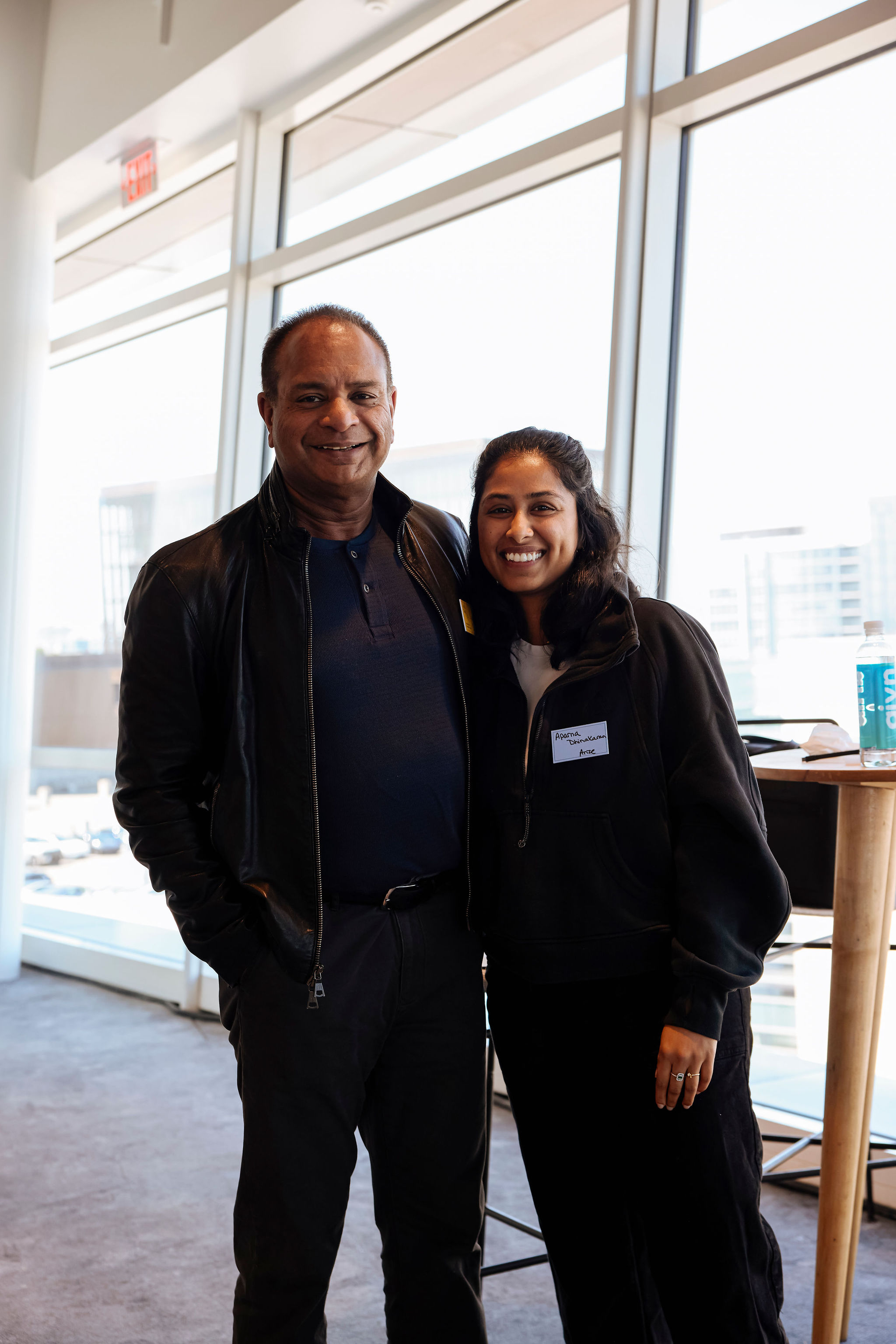
Aparna and I at our 2026 AGM.

Get insights directly to your inbox.

Subscribe to The Foundation for our thinking on what comes next, firsthand lessons from our founders, and guidance on building from day zero.

Partnering at day zero

We signed the term sheet for Arize’s seed in February 2020, weeks before the world shut down. There was no product and no revenue. The first line of their seed deck was "We Make AI Work."

At the time, essentially all of the capital in AI was flowing toward building and training models. Almost none of it was aimed at the question of whether a model, once deployed, was doing its job. That asymmetry seemed unlikely to hold.

Our investment in Arize also followed from a conviction that Foundation had been strengthening for a decade: that AI would continue advancing faster than most people expected, and that it would become one of the core technologies powering our economy.

I first deployed ML for behavioral targeting when I ran Microsoft’s online ads business, and later invested early in Conviva, Aggregate Knowledge, and Databricks. By 2020, I was confident that AI would soon make the decisions that run large companies, and that the leaders accountable for those decisions would need a way to observe the models behind them.
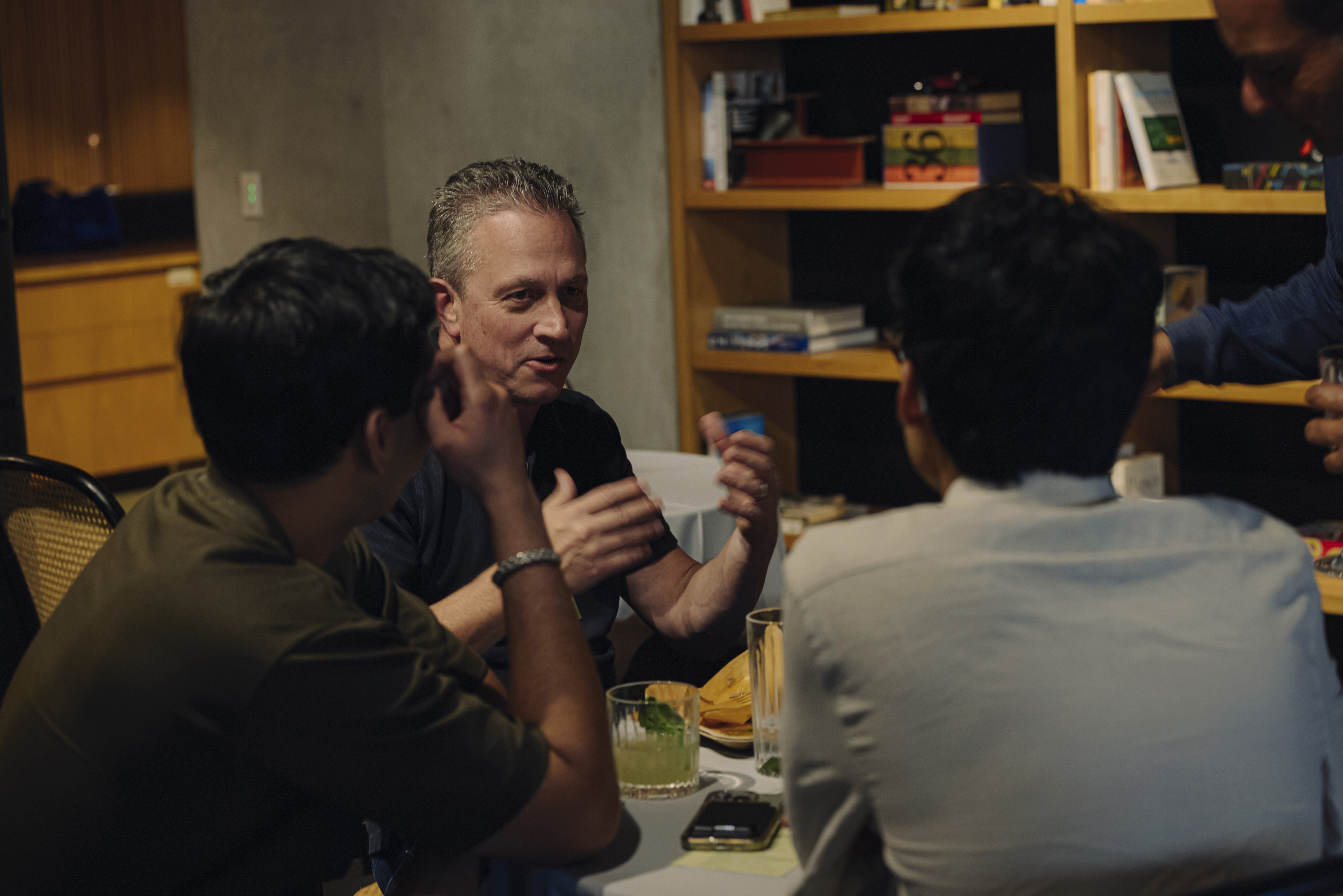
Jason speaks with fellow founders at our 2026 CEO dinner.

Navigating the shift to LLMs

Arize’s first customers were among the most sophisticated ML organizations in the world. They trained their own models and ran them at enormous scale.

Starting in late 2022, after the release of ChatGPT, four things changed.

Teams stopped training their own models and started building on top of model APIs. The buyer shifted with them, from an ML data scientist to an AI engineer. The failures took a new shape, from statistical drift in a feature distribution to non-deterministic answers. And because there was no right answer to check against, the core work of observability shifted from monitoring dashboards to defining what a good answer looked like and testing for it.

The market Arize had initially been built to serve was becoming a corner of a much larger one. Meeting the surge of new demand meant re-engineering the product, the sales motion, the marketing strategy, and the financial model at the same time. Every one of those is a bet-the-company project on its own. Doing all of them at once is among the hardest things I’ve watched a founding team pull off. Jason and Aparna brought a rare blend of ambition, grit, and technical depth to every aspect of it.

Jason, Aparna, and their team went and found the new builders where they already were. Phoenix, the open-source project they launched in 2023, gave AI engineers a way to trace, evaluate, and debug what they were building.

They also bet on evals. Once teams were renting models instead of training them, the bottleneck moved to judging the output: deciding what a good answer looks like for your particular use case, and measuring against it continuously. Arize built around that conviction in 2023, before evals were an established category. They made the prescient choice to stay independent of any single model provider or framework.
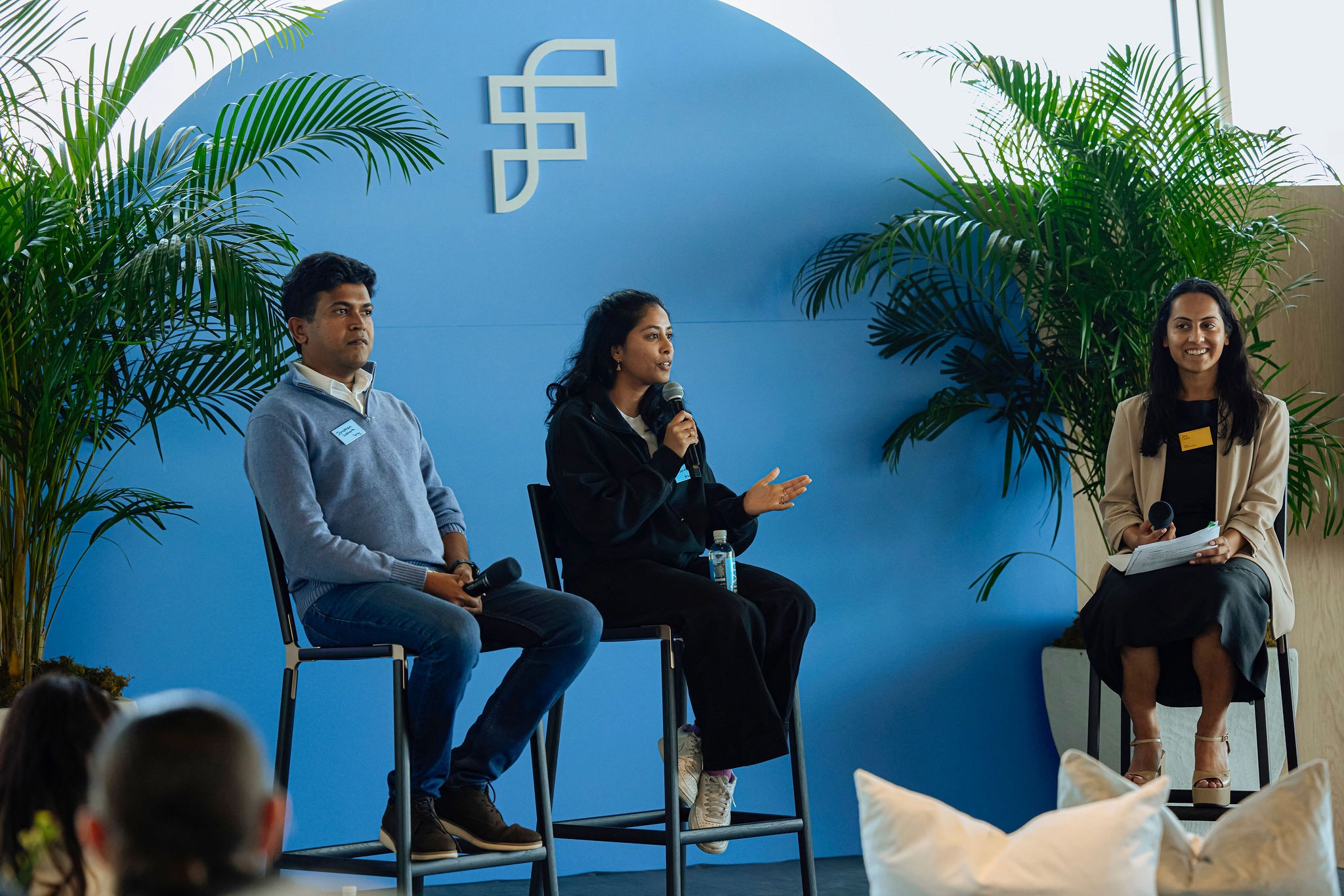
Aparna on stage at our 2026 AGM with Jonathan Siddharth, co-founder and CEO of Turing, and my partner, Jaya.

The opportunity ahead

We’re proud to have partnered with Jason and Aparna for the past six years, and with Jason for the past sixteen. What they’ve built at Arize now runs inside leading companies including Uber, Instacart, PagerDuty, Atlassian, Reddit, Docusign, Booking.com, Tripadvisor, and Snorkel.

As they join forces with Dynatrace, the opportunity ahead of them is massive. We’re moving from chatbots to agents that take on ever-more complex work. Software designed to act autonomously needs a different kind of infrastructure and different safeguards, and most of it doesn't exist yet.

Evals and observability are also what enable AI systems to compound what they learn. As Aparna described at our 2026 AGM, an agent is like a new employee: it needs lots of feedback before it starts creating value. Companies that close that learning loop end up with something no lab can sell them: an agent that fits their business better every time it runs, built on knowledge and context that is theirs alone.

As we celebrate Jason and Aparna, we remain as bullish as ever on evals, observability, and the generation of infra and apps that will carry AI into every part of our economy. If you’re building in AI, we’d love to hear from you. It’s never too early.

Posted

0 MIN READ

Show Outline

For a stretch in the early 2010s, I did push-ups on the floor of TubeMogul’s board meetings. The arrangement was that if the team beat its numbers, I dropped and did a set. They beat their numbers often enough that it became a problem for me. 

Jason Lopatecki, TubeMogul’s co-founder, reminded me of this recently. We were both in those meetings because of a chance we had taken on each other. In 2010, TubeMogul had two term sheets for its Series B. At the time, I was early in my career in venture, with few investments to point to. They took ours.

Today, Dynatrace announced that it’s acquiring Arize, the company Jason co-founded with Aparna Dhinakaran, and the second of his companies Foundation has backed. When we wrote their seed check in 2020, the problem they set out to solve belonged to a handful of companies running ML at enormous scale. Six years later, it belongs to every company building with AI.

Jason at our 2025 CEO Summit.

TubeMogul, Berkeley, and the origins of Arize

Jason co-founded TubeMogul out of Berkeley in 2008. At the time, very few companies were running ML in production, and fewer still had a co-founder like Jason who could walk you through the business case and the algorithm in the same conversation. In 2014, TubeMogul went public. It was acquired by Adobe in 2016.

Arize started a few years later, after Jason, Aparna, and I had each found our way to the same problem from different directions.

Jason was running an ML team at Adobe, and he kept hitting the same wall. A model would begin making worse decisions, and every system around it would report that things were fine. The data scientist who built the model could not explain it. Neither could the engineer on call, or the exec asking why the number had moved. 

At Foundation, my partner Joanne and I were looking at the same gap from the investing side. Enterprises were putting models into production with little ability to observe what those models were doing. When Jason and I realized we were circling the same problem, we started working through it together over months of conversation.

Like Jason, Aparna had lived this problem firsthand. She had spent three years building core ML infrastructure at Uber, which was then one of the few organizations in the world running models at scale. She and Jason had met years earlier, during her time as an intern at TubeMogul.

Arize was also a Berkeley story. Jason and Aparna both studied EECS there. TubeMogul also came out of Berkeley, as did Brett Wilson, another of its co-founders, and Foundation’s co-investor in Arize. Berkeley’s labs have been building the systems underneath ML for as long as the field has existed. I’ve spent much of my venture career alongside the technical founders who develop there from the earliest days of their startups.

Aparna and I at our 2026 AGM.

Get insights directly to your inbox.

Subscribe to The Foundation for our thinking on what comes next, firsthand lessons from our founders, and guidance on building from day zero.

Partnering at day zero

We signed the term sheet for Arize’s seed in February 2020, weeks before the world shut down. There was no product and no revenue. The first line of their seed deck was "We Make AI Work."

At the time, essentially all of the capital in AI was flowing toward building and training models. Almost none of it was aimed at the question of whether a model, once deployed, was doing its job. That asymmetry seemed unlikely to hold.

Our investment in Arize also followed from a conviction that Foundation had been strengthening for a decade: that AI would continue advancing faster than most people expected, and that it would become one of the core technologies powering our economy.

I first deployed ML for behavioral targeting when I ran Microsoft’s online ads business, and later invested early in Conviva, Aggregate Knowledge, and Databricks. By 2020, I was confident that AI would soon make the decisions that run large companies, and that the leaders accountable for those decisions would need a way to observe the models behind them.

Jason speaks with fellow founders at our 2026 CEO dinner.

Navigating the shift to LLMs

Arize’s first customers were among the most sophisticated ML organizations in the world. They trained their own models and ran them at enormous scale.

Starting in late 2022, after the release of ChatGPT, four things changed.

Teams stopped training their own models and started building on top of model APIs. The buyer shifted with them, from an ML data scientist to an AI engineer. The failures took a new shape, from statistical drift in a feature distribution to non-deterministic answers. And because there was no right answer to check against, the core work of observability shifted from monitoring dashboards to defining what a good answer looked like and testing for it.

The market Arize had initially been built to serve was becoming a corner of a much larger one. Meeting the surge of new demand meant re-engineering the product, the sales motion, the marketing strategy, and the financial model at the same time. Every one of those is a bet-the-company project on its own. Doing all of them at once is among the hardest things I’ve watched a founding team pull off. Jason and Aparna brought a rare blend of ambition, grit, and technical depth to every aspect of it.

Jason, Aparna, and their team went and found the new builders where they already were. Phoenix, the open-source project they launched in 2023, gave AI engineers a way to trace, evaluate, and debug what they were building.

They also bet on evals. Once teams were renting models instead of training them, the bottleneck moved to judging the output: deciding what a good answer looks like for your particular use case, and measuring against it continuously. Arize built around that conviction in 2023, before evals were an established category. They made the prescient choice to stay independent of any single model provider or framework.

Aparna on stage at our 2026 AGM with Jonathan Siddharth, co-founder and CEO of Turing, and my partner, Jaya.

The opportunity ahead

We’re proud to have partnered with Jason and Aparna for the past six years, and with Jason for the past sixteen. What they’ve built at Arize now runs inside leading companies including Uber, Instacart, PagerDuty, Atlassian, Reddit, Docusign, Booking.com, Tripadvisor, and Snorkel.

As they join forces with Dynatrace, the opportunity ahead of them is massive. We’re moving from chatbots to agents that take on ever-more complex work. Software designed to act autonomously needs a different kind of infrastructure and different safeguards, and most of it doesn't exist yet.

Evals and observability are also what enable AI systems to compound what they learn. As Aparna described at our 2026 AGM, an agent is like a new employee: it needs lots of feedback before it starts creating value. Companies that close that learning loop end up with something no lab can sell them: an agent that fits their business better every time it runs, built on knowledge and context that is theirs alone.

As we celebrate Jason and Aparna, we remain as bullish as ever on evals, observability, and the generation of infra and apps that will carry AI into every part of our economy. If you’re building in AI, we’d love to hear from you. It’s never too early.

Get insights directly to your inbox.

Subscribe to The Foundation for our thinking on what comes next, firsthand lessons from our founders, and guidance on building from day zero.

Subscribe to The Foundation for our thinking on what comes next, firsthand lessons from our founders, and guidance on building from day zero.