
How AI is reshaping design in tech

 (Trey Holterman, Co-founder & CEO, Tennr)

Posted

0 MIN READ
0 MIN READ

Show Outline

The dominant story about AI and design has been about what designers might lose. Creativity. Control. Craft. The things that many consider to be the defining elements of what it means to be a designer.

The data tells a different story. In our AI in Design 2026 report, a joint effort between Designer Fund and Foundation Capital, the research reveals that designers working in tech are doing more, owning more, and shipping more than they were a year ago. They’re also unlocking new capabilities and new opportunities with AI as their co-pilot, from shipping code to rapidly generating working prototypes.

Our report draws on a survey of 900 designers across 60+ countries, 25+ in-depth interviews with design leaders and practitioners, 50+ public sources reviewed to triangulate themes, and a series of case studies featuring designers at startups like our portfolio companies Framer and Stripe, along with Linear, Notion, Shopify, and Sierra. Topics include the ways in which workflows are changing, how design is evolving as a craft, and how roles are shifting across organizations. When we released our first report last year, designers were trying out AI tools. Now, they’re rebuilding how they work around those tools. 

Below are some of our key takeaways from the report, which you can read in full here.

Nearly every designer is using AI

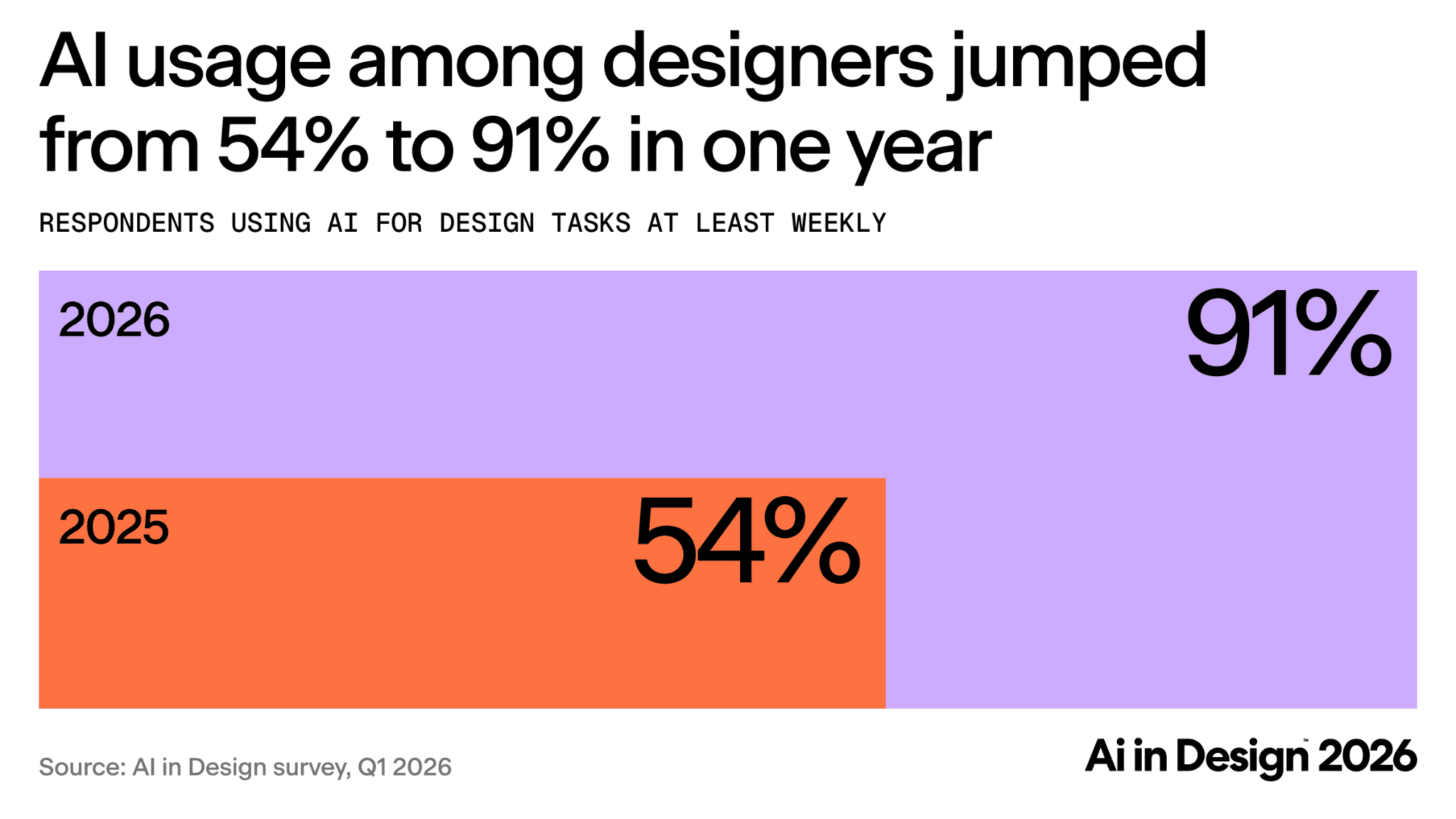
Adoption is almost universal: 91% of designers now use AI weekly, up from 53% last year, and 75% use it daily. A year ago, our respondents were experimenting with AI tools in ideation and prototyping, but rarely in production workflows. Now, we see AI being woven into every phase of design work.
Human input is still required

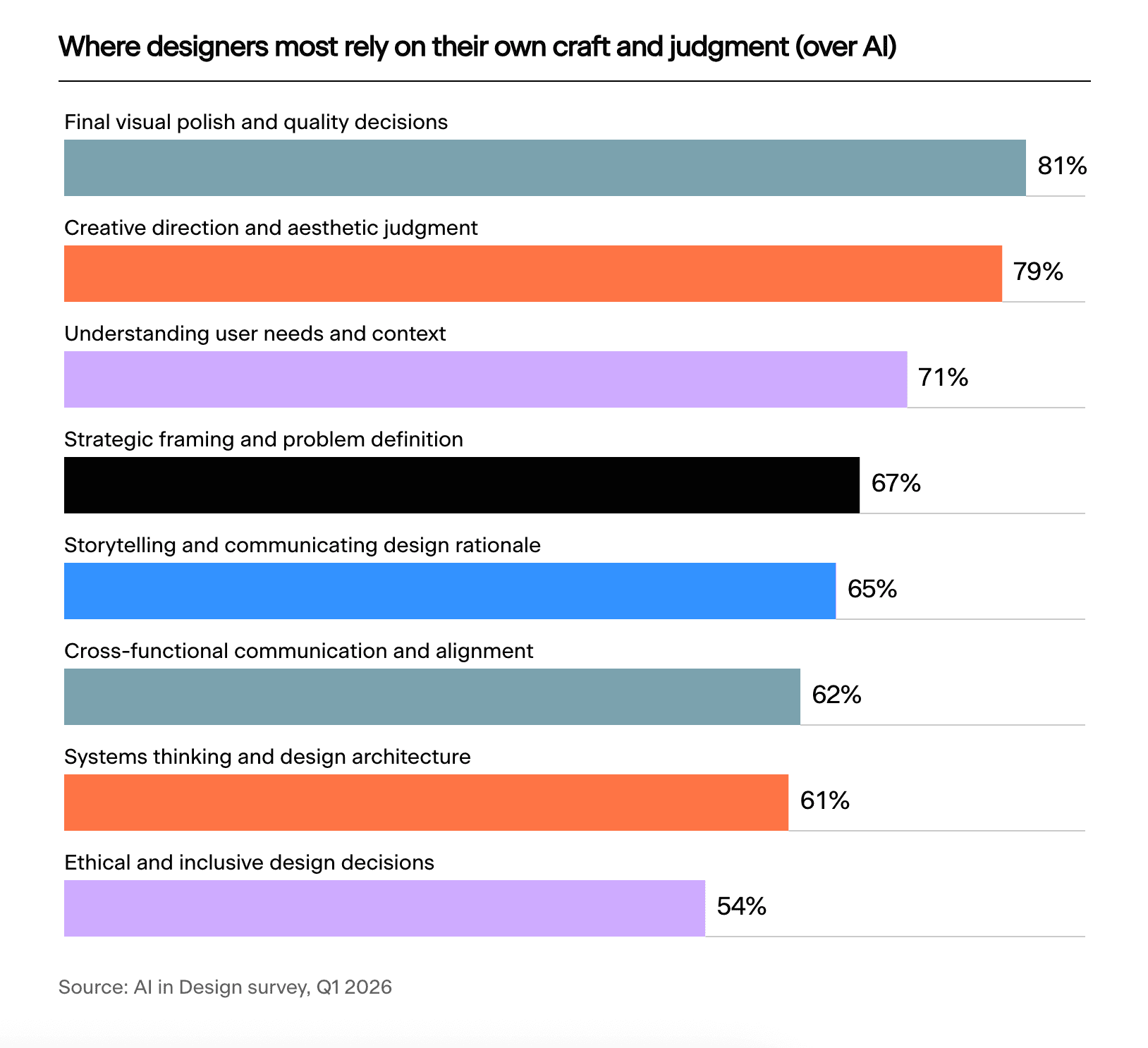
The human is still in the loop. 80% of designers say human judgment remains essential for creative direction and quality decisions.

Taste has become a keyword in the AI era. Cultivating a sense of taste will only become more important as we partner with AI to do more and more work. We think of taste as an earned point of view, built from a lifetime of emotional, physical, and intellectual responses to art, design, and beauty. It’s also deeply personal: gather the best designers in the world and ask what makes a design exceptional, and they are unlikely to agree. In a world where everyone can build, a distinctive perspective on what makes a design extraordinary is a key edge.
The designer engineer is no longer an oxymoron

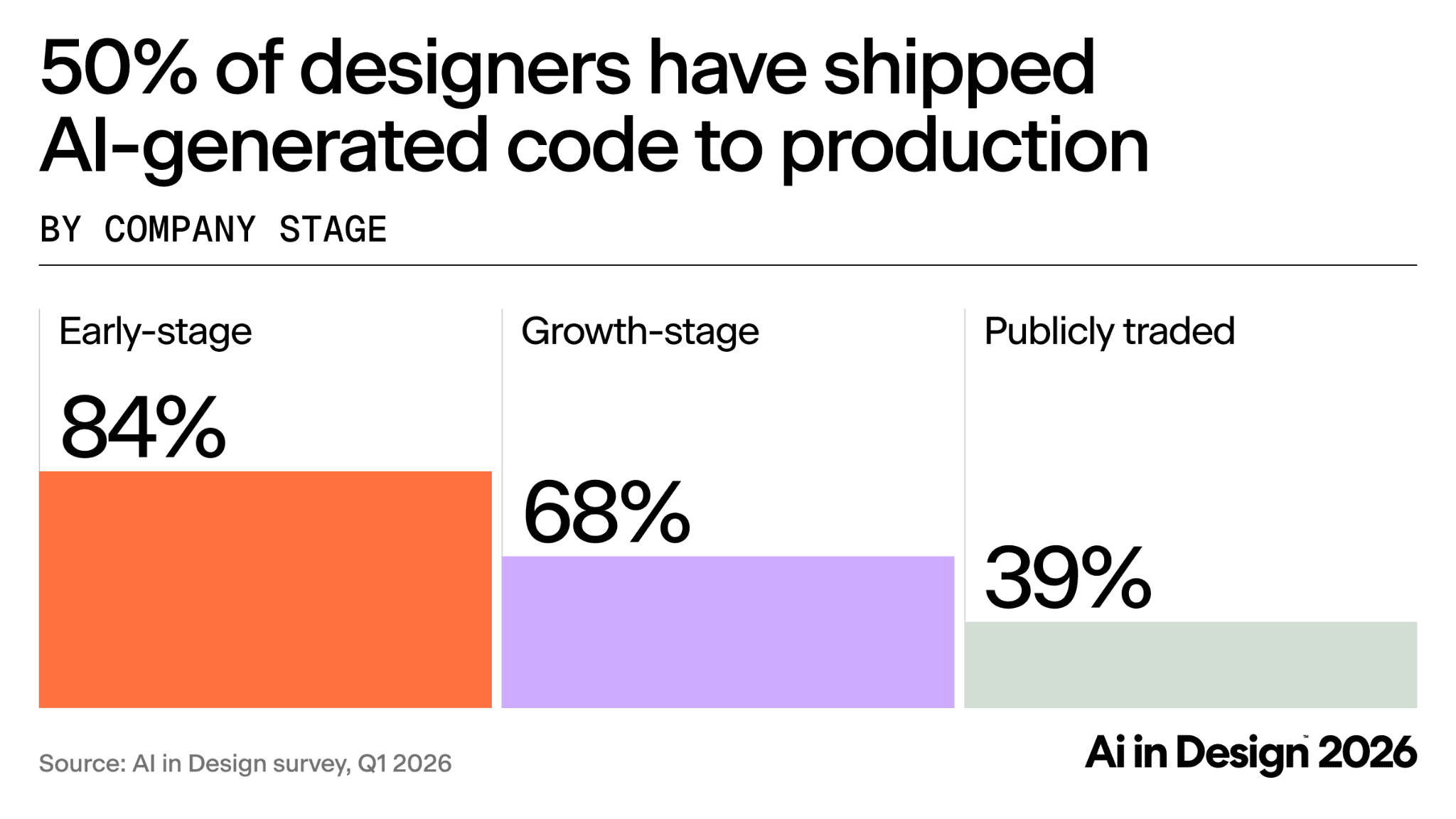
We’re moving from “should designers code” to “when and how should designers code.” Half the designers surveyed, across brand and product design, have pushed frontend or backend code. At early-stage startups, that number jumps to 66%. Titles are shifting to match: 20% of respondents identify as “design engineers.”

To give one example, designers are now shipping working prototypes at every stage of the design process. 43% of designers say their companies expect working prototypes, and 36% say that projects now start with them, rather than with briefs.
Get insights directly to your inbox.

Set your newsletter preferences:

Set your newsletter preferences:

Product swimlanes are less defined, affecting collaboration

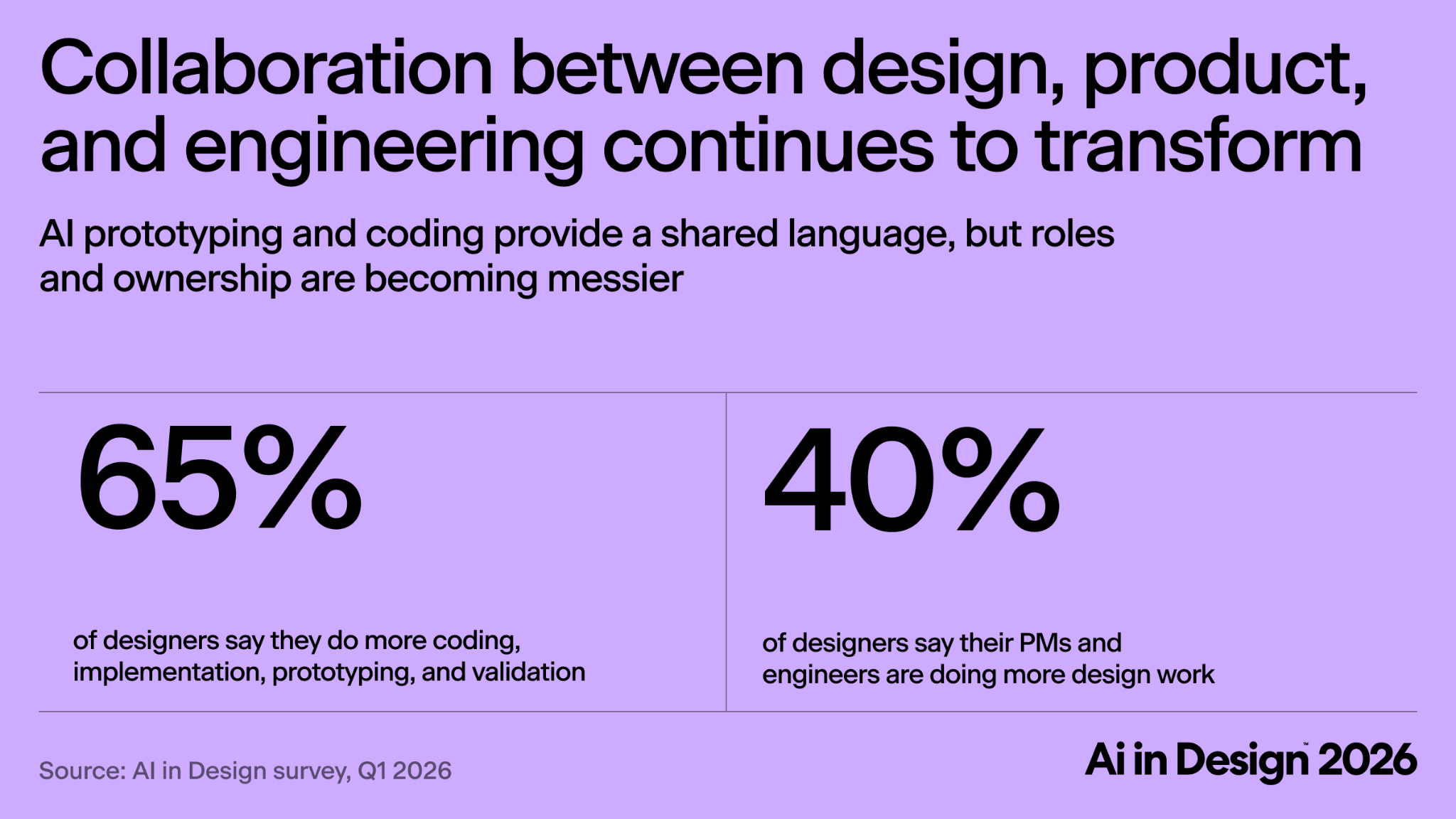
AI coding and prototyping enable designers, PMs, and engineers to work in a shared language, but they’re also making roles and ownership messier. 65% of designers report that they now do more PM and engineering tasks, and 40% say their PMs and engineers are doing more design work. This aligns with our thesis on the great reorg: roles are reshaping to accommodate people who can work fluidly across functions.

With swimlanes less defined, how to work together is becoming a bigger issue. A third of respondents say collaboration has become messier, as it’s become less clear who owns what part of the process. To complicate this, AI tools without collaboration features are creating version control challenges and silos where people work too independently. Taken together, 20% of our respondents report that collaboration with their human teammates has decreased.
The AI toolstack is still in flux

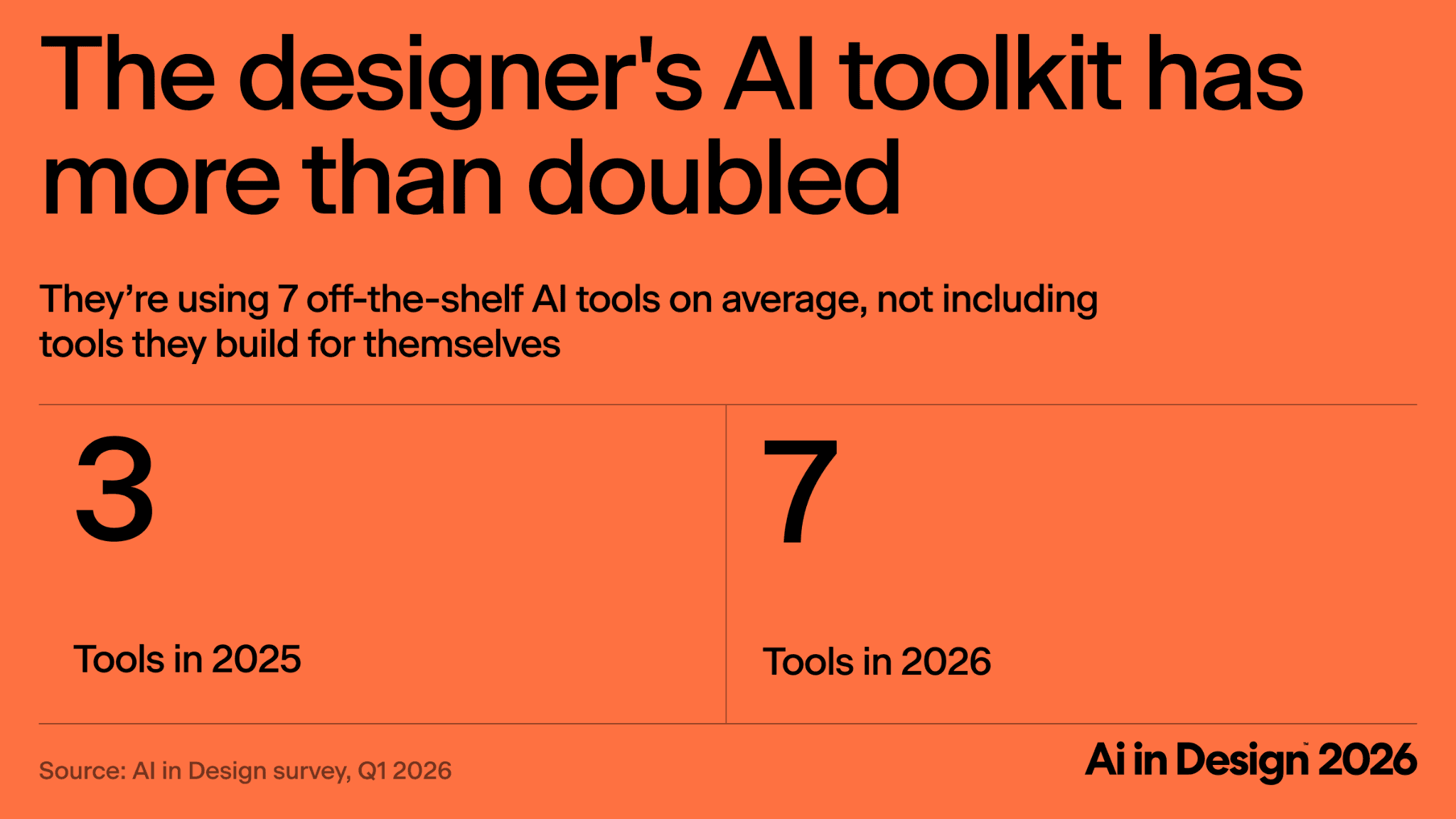
AI usage has surged, but the toolstack is still in flux. The designer’s AI toolkit has more than doubled from an average of three tools to seven as designers discover new ways to reap the benefits of an AI partner. Tool adoption ranges from general use (Claude, ChatGPT, Otter) and design-specific (Figma Make, Midjourney, Weavy) to coding-focused (Cursor, Claude Code) and internally built.

Output quality is both the most popular driver of stickiness and the biggest weakness in current AI design tools. 80% of designers say reliable, high-quality output is what earns an AI tool a place in their workflow. At the same time, 62% cite inconsistent or unreliable output as their biggest challenge when using AI for design work. Many say the tools just “aren’t quite there” yet but expect them to get there soon.

In addition to publicly available tools, designers are also inventing microtools to automate manual work. They are creating the design software they’ve always wished they had, and orchestrating agentic workflows that let non-designer teammates create on-brand work using their established design system. As boundaries between product-building roles blur, design is positioned to play a connective role that translates between disciplines, holding the vision and maintaining the quality bar.
What’s next

We’re at a transformational moment, with AI tools changing how designers work and softening the boundaries between disciplines. Instead of approaching product-building from the purview of a specific role, the strongest designers are considering the entire build of a feature, from design to engineering and even what happens post-launch.

Because of this speed of execution, incumbents are quickly finding themselves challenged by new players, like our portfolio companies OpenStudio and Framer. Smaller, nimble teams already further along in the great reorg are at an advantage. To hold their ground, organizations will need to shift quickly, pairing quick adoption of new capabilities with processes and structures that enable cross-functional collaboration. The best practitioners will need to be both holistic systems thinkers and hands-on tinkerers.

Interested in learning more? Read the full AI in Design report: stateofaidesign.com
Posted

0 MIN READ

Show Outline

The dominant story about AI and design has been about what designers might lose. Creativity. Control. Craft. The things that many consider to be the defining elements of what it means to be a designer.

The data tells a different story. In our AI in Design 2026 report, a joint effort between Designer Fund and Foundation Capital, the research reveals that designers working in tech are doing more, owning more, and shipping more than they were a year ago. They’re also unlocking new capabilities and new opportunities with AI as their co-pilot, from shipping code to rapidly generating working prototypes.

Our report draws on a survey of 900 designers across 60+ countries, 25+ in-depth interviews with design leaders and practitioners, 50+ public sources reviewed to triangulate themes, and a series of case studies featuring designers at startups like our portfolio companies Framer and Stripe, along with Linear, Notion, Shopify, and Sierra. Topics include the ways in which workflows are changing, how design is evolving as a craft, and how roles are shifting across organizations. When we released our first report last year, designers were trying out AI tools. Now, they’re rebuilding how they work around those tools. 

Below are some of our key takeaways from the report, which you can read in full here.

Nearly every designer is using AI

Adoption is almost universal: 91% of designers now use AI weekly, up from 53% last year, and 75% use it daily. A year ago, our respondents were experimenting with AI tools in ideation and prototyping, but rarely in production workflows. Now, we see AI being woven into every phase of design work.

Human input is still required

The human is still in the loop. 80% of designers say human judgment remains essential for creative direction and quality decisions.

Taste has become a keyword in the AI era. Cultivating a sense of taste will only become more important as we partner with AI to do more and more work. We think of taste as an earned point of view, built from a lifetime of emotional, physical, and intellectual responses to art, design, and beauty. It’s also deeply personal: gather the best designers in the world and ask what makes a design exceptional, and they are unlikely to agree. In a world where everyone can build, a distinctive perspective on what makes a design extraordinary is a key edge.

The designer engineer is no longer an oxymoron

We’re moving from “should designers code” to “when and how should designers code.” Half the designers surveyed, across brand and product design, have pushed frontend or backend code. At early-stage startups, that number jumps to 66%. Titles are shifting to match: 20% of respondents identify as “design engineers.”

To give one example, designers are now shipping working prototypes at every stage of the design process. 43% of designers say their companies expect working prototypes, and 36% say that projects now start with them, rather than with briefs.

Get insights directly to your inbox.

Set your newsletter preferences:

Product swimlanes are less defined, affecting collaboration

AI coding and prototyping enable designers, PMs, and engineers to work in a shared language, but they’re also making roles and ownership messier. 65% of designers report that they now do more PM and engineering tasks, and 40% say their PMs and engineers are doing more design work. This aligns with our thesis on the great reorg: roles are reshaping to accommodate people who can work fluidly across functions.

With swimlanes less defined, how to work together is becoming a bigger issue. A third of respondents say collaboration has become messier, as it’s become less clear who owns what part of the process. To complicate this, AI tools without collaboration features are creating version control challenges and silos where people work too independently. Taken together, 20% of our respondents report that collaboration with their human teammates has decreased.

The AI toolstack is still in flux

AI usage has surged, but the toolstack is still in flux. The designer’s AI toolkit has more than doubled from an average of three tools to seven as designers discover new ways to reap the benefits of an AI partner. Tool adoption ranges from general use (Claude, ChatGPT, Otter) and design-specific (Figma Make, Midjourney, Weavy) to coding-focused (Cursor, Claude Code) and internally built.

Output quality is both the most popular driver of stickiness and the biggest weakness in current AI design tools. 80% of designers say reliable, high-quality output is what earns an AI tool a place in their workflow. At the same time, 62% cite inconsistent or unreliable output as their biggest challenge when using AI for design work. Many say the tools just “aren’t quite there” yet but expect them to get there soon.

In addition to publicly available tools, designers are also inventing microtools to automate manual work. They are creating the design software they’ve always wished they had, and orchestrating agentic workflows that let non-designer teammates create on-brand work using their established design system. As boundaries between product-building roles blur, design is positioned to play a connective role that translates between disciplines, holding the vision and maintaining the quality bar.

What’s next

We’re at a transformational moment, with AI tools changing how designers work and softening the boundaries between disciplines. Instead of approaching product-building from the purview of a specific role, the strongest designers are considering the entire build of a feature, from design to engineering and even what happens post-launch.

Because of this speed of execution, incumbents are quickly finding themselves challenged by new players, like our portfolio companies OpenStudio and Framer. Smaller, nimble teams already further along in the great reorg are at an advantage. To hold their ground, organizations will need to shift quickly, pairing quick adoption of new capabilities with processes and structures that enable cross-functional collaboration. The best practitioners will need to be both holistic systems thinkers and hands-on tinkerers.

Interested in learning more? Read the full AI in Design report: stateofaidesign.com

Get insights directly to your inbox.

Set your newsletter preferences:

Set your newsletter preferences: