
When selling software, which tactics actually move the needle?
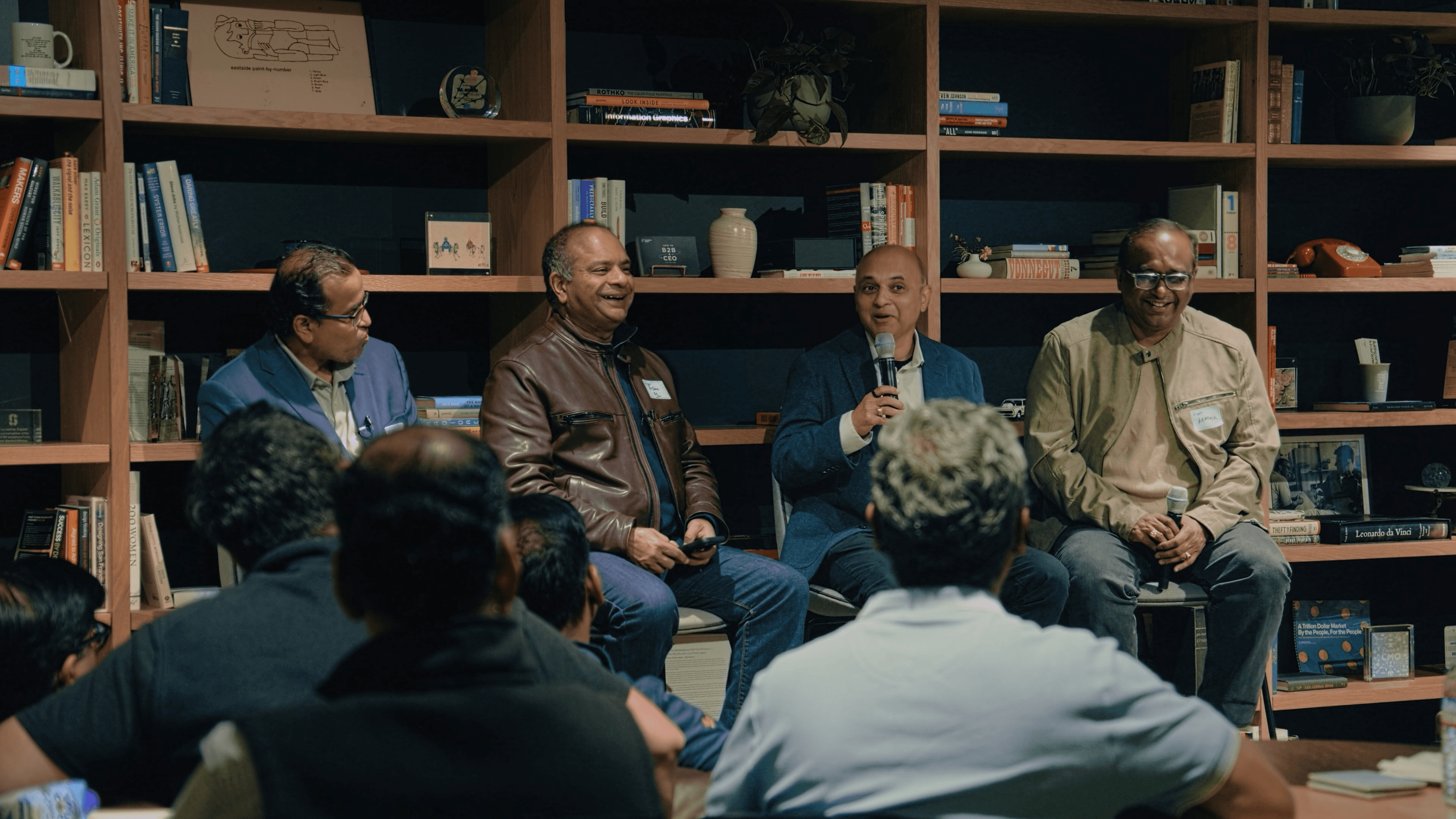
Our CIO dinner gave our founders a rare opportunity to ask that question, and more. In small groups followed by a panel discussion, CIOs shared what helps teams move from pilots to production, offering advice and feedback outside the sales cycle.
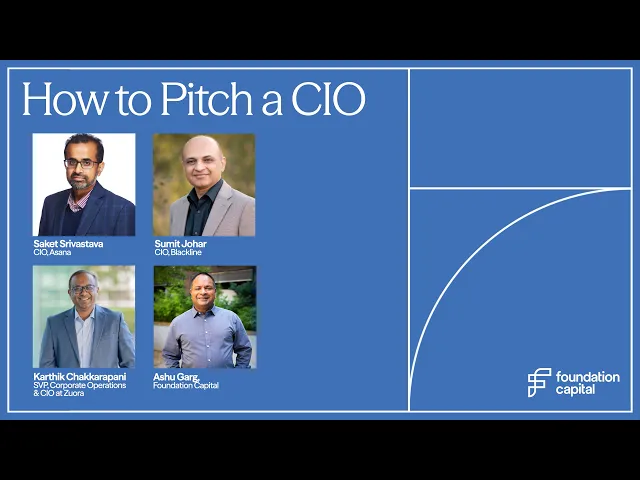
In the closing panel, three sitting CIOs — Karthik Chakkarapani from Zuora, Saket Srivastava from Asana, and Sumit Johar from BlackLine — were candid about what actually works for them when it comes to closing contracts and kicking off POCs: warm introductions over cold outreach, champions nurtured from within the business, genuine buy-in across both business leads and IT, and more.
Watch the video here, or jump below to recap the key insights that emerged from the talk.
0:00 – Intros
0:59 – The 30-second rule for pitching CIOs
2:20 – Why cold outreach is mostly dead, and what to do instead
6:05 – Sell promotions, not software
8:14 – Where purchase decisions actually originate
10:11 – The fastest way to destroy a CIO relationship
12:22 – Show up prepared to speak to outcomes
17:04 – Always bring a sales engineer
21:19 – How the procurement process is being reinvented
23:23 – Agent governance and security are now central procurement questions
31:02 – What your POC should look like
Our takeaways from the conversation
Go for the warm introduction
Emailing CIOs directly is largely a waste of time. Inboxes are filtered and ignored. Warm introductions, regular social presence (especially on LinkedIn), and peer referrals are far more effective ways to get on a CIO’s radar. “With LinkedIn or email we get spammed—hundreds in a day. I don't believe that's the best way to reach a CIO,” Saket explains. “A warm introduction goes a long way.”
Find your champion
60-80% of purchase decisions originate from line-of-business directors and team members, not IT leadership. Often, the smarter play is finding the individual who can earn a promotion by championing your software, and letting that enthusiasm bubble up organically.
When it comes to finding that person, Ashu explains: “Pinging CIOs is actually not the most productive way to do it. It's figuring out who in the team cares, who in the team can get a promotion because they use your software. You can't sell software, you have to sell promotions to the people who buy your software.”
Building on this idea, Sumit adds that a procurement decision is often a group decision. “CIOs definitely have a huge influence, but we also don't just go out and say, it is my decision, just go and do it. It never really works like that. It's going to bite us down somewhere later in the game.”
Pitch outcomes, not features
Showing up with a feature list is an immediate disqualifier for many of the CIOs on our panel. CIOs want to understand the measurable business impact and how it maps to their specific organizational priorities—and they expect you to have done enough homework to already know what those priorities are.
Karthik sums it up. When it comes to selling AI products, “it’s not about pitching the features, it’s more about pitching on the outcomes,” he says.
Your proof-of-concept needs to prove its value
Long, drawn-out pilots are harder to sell these days. Enterprises want sandboxed, accelerated evaluation processes with pre-agreed success criteria and clear measurement frameworks before the POC even begins.
“Before we begin the pilot, we have to see the success criteria…Can you show the proof and can you see the value?” Karthik asks.
AI makes security and governance more important than ever
Questions around data flows, agent governance, permission models, and lifecycle management of agents are now central to any procurement conversation, not afterthoughts—especially given the complexity that AI introduces.
Sumit illustrates the growing challenge: “Suddenly we have 450 agents within my company, out of which 300 are built by employees, and the rest are by the IT team… Are these agents compromising the inherent SaaS-based data access permissions based model? Because if one agent has access to the data and another agent is now connecting to this agent, am I compromising that foundational security that I had? These questions are now becoming part of the purchase process.”
Saket recaps how software teams are beginning to think about agents as part of the team. “We really need to start thinking about the life cycle of an agent as we've been thinking about the life cycle of a worker. You onboard them—how do you retire them?” he says. Saket knows he’s not alone in this, adding, “That’s a problem that a lot of us in SaaS are certainly thinking about.”
Read the full talk:
Ashu: 90-95% of the decisions actually start with someone else in the organization and they bubble their way up because you actually want someone in your team to take accountability. And so pinging CIOs is actually not the most productive way to do it. It's figuring out who in the team cares, who in the team can get a promotion because they use your software.
Host: Tonight's event is all about giving you unfiltered access to the people who actually make enterprise buying decisions. The goal is to help you sharpen your pitch, run better pilots. Thank you, Karthik, for helping catalyze this and making this event happen. From Zuora, we have Sumit from Blackline, Saket from Asana, and I'll pass it to you, Ashu, to kick us off.
Ashu: Since Karthik started this whole thing, we've got to start with him with the first question. So the goal of this is to keep this relatively tactical and focus on how do you get traction? How do you go from zero to one with enterprise CIOs? So we can talk about SaaS, we can talk about AI, and we can talk about what's happening in the markets. Let's just ignore all of that for 30 minutes and talk about how to sell software.
Karthik: So if somebody is approaching in a message or in person, it's almost like you guys sending me a trailer. If I'm not able to understand the plot in the first 30 seconds, I'm not going to watch the movie. So similar to that, and I see any outreach in whatever form, whether it's digital or in person, the first thing is to be very clear. If I cannot understand the value prop in 30 minutes, what problem you're solving with measurable impact, I'm not going to take the meeting.
The second one is be very specific. It's not about pitching the features. It's more about pitching on the outcomes. And the third one is be very relevant, right? It should be focused more on my priorities and the challenges I face in the organization. And last but not the least is the proof. Show me the proof and not the logos that it has that cannot run below, but even if there is one to two crews, even if you're an early stage vendor or a startup or a late stage company, it's all about the product that really matters, in value and outcomes and not just logos.
Saket: I would perhaps never respond without outreach to me. LinkedIn or email and we get spammed, right? Hundreds in a day, perhaps, right? I don't believe that's the best way to reach a CIO. A warm introduction goes a long way. So it's such a connected world that you perhaps find someone that might be connected with me and then use that person to get a referral. All these events are great, right? So just having some sort of connection before trying to have that cold outreach goes a long way in my opinion.
Sumit: So I tend to agree slightly more with Saket, no offense Karthik, but I must say that the process of reaching out has dramatically changed in the last few years. I mean, it has become so easy for anybody to reach out to anybody that it's just practically not possible for CIO or any other executive to literally go through every single email who has reached out to me, especially on the email I tell you, I never even look at email reach out.
So I mean, I have a lot of sympathy for all the videos who were really hard sending all these hundreds and hundreds of emails every single day, but I'm telling you all of them are getting filtered. Now I will tell you what gets attention sometimes. First of all, it's important to understand the purchase decisions and the interest and the research. They won't start with somebody reaching out. They start with me in my capacity starting the research by myself. Where am I paying attention? I'm paying attention to my LinkedIn, of course. There are a lot of people I follow. There are a lot of people in my network that I ask questions to. In this world, everything is connected.
I'll give you a live example between Karthik and Saket actually. So recently I was looking for buying a software to replace my Jira based outdated ITSM solution. And I saw this guy on LinkedIn is writing a lot of material on LinkedIn. He and I never talked about it, but I know he's invested in the company and he's going gaga about that company and all of that is getting registered in my mind. So this is how I learned about that company. This is how we started talking about them. They never had a cool reach out to me. He still made a connection. And because the credentials were strong, my passive research was really good. That's how the first connection actually got established, not through a core email. So that's just my perspective.
Ashu: But on a serious note, I think the thing I would just add to this is, look, cold outreaches do work, but they're rare. So I wouldn't say it's zero, but it is rare. I think you have to combine the ground game, which is how I think about cold outreach, with your air game, which is about marketing on social, the narrative you tell, and people respond when the narrative resonates and it strikes, it really resonates and they remember. And so when you get the email, you're like, oh, I heard about the story somewhere. And if your narrative resonates often enough, you don't even remember how it resonated or where it resonated, it just becomes, you know, it's locked in your mind. So I think that is a large part of it and the mix will depend on who it is. Karthik is clearly kinder.
Saket: Let me add one thing. I think what I'm trying to get to is that maybe these outreaches might not work for the C-suite. It certainly might work for our team members, right? The directors of IT, the managers, right? I'm guessing they're perhaps getting fewer. They're reading those. So when my team member comes to me and says, hey, this might, this looks interesting, this is a problem that we're trying to solve. I'll probably pay more attention to that conversation. So I'm certainly not suggesting that you stop the outreaches.
Ashu: 90-95% of the decisions actually start with someone else in the organization and they bubble their way up because you actually want someone in your team to take accountability. And so pinging CIOs is actually not the most productive way to do it. It's figuring out who in the team cares, who in the team can get a promotion because they use your software. You can't sell software, you have to sell promotions to the people who buy your software.
Karthik: I think at the end of the day, we want our teams to be more accountable and responsible as well. So the more you connect with the CIO's directs, because if they are believing in it, it comes up. Even if someone comes to us, we still bring them along the journey right from the first weekend, right? So it's always good to include the next level leaders and then them on the narrative.
Sumit: One thing I also want to clarify on this note is, especially when I deal with really early startup founders, they don't sometimes have full appreciation of how a typical procurement process within any software company or any company really works. Sometimes they assume that, well, I spoke to the CIO. He seemed really interested. Why are we not proceeding? Why are we not making decisions? The reality is that a procurement decision about a software is actually a group decision. There are multiple stakeholders involved in that. CIOs definitely have a huge influence, but we also don't just go out and say, it is my decision, just go and do it. It never really works like that. It's going to bite us down somewhere later in the game.
In fact, in my company, I'm responsible for driving a technology console, as we call it. And the whole purpose of that console is to make joint software purchase decisions in a setting where we have departmental representation coming from many different groups. And then we talk about what we are buying. What do we need to buy this? What is the ROI? Does it really make any sense or not? It's really that process. It involves multiple parties. So more of my suggestions is to get yourself acquainted. Whoever you are selling it to, what does the selling process or the buying process of that company really look like? If you don't know that, you're going to be up for a surprise when you feel like why the needle is not moving.
Ashu: So the question, I'll just repeat the question for everyone. The question was, of the inbound activity in terms of purchase decisions, what percentage comes from the line of business versus what percentage is initiated by the IT organization?
Karthik: Sales and marketing and the product technology or the ones, at least in my company, most of the in-bounds comes to that. And actually, we want to partner and collaborate that way. IT doesn't have to be the first team to say, hey, these are some of the tools that we've been looking for.
Ashu: But what's your percentage number?
Karthik: I would say almost like one third.
Ashu: So one third. What's your number?
Sumit: I'm surprised actually, it's a pretty low number. I would say 80% of the requests that I'm seeing are coming from the line of business requests. I mean, to exactly what Saket was saying, we actually end up finding ourselves how to say no, because if you say yes to everything, it just becomes the wild, wild west. So 80% is the number that I'm seeing.
Ashu: 80%.
Saket: Yeah, my number would also be higher. There are a lot of requests that come in, maybe 60% or 70% of those requests come from the business. We do want to make sure that you're not trying to circumvent going through around us and going to the business. If you're going to someone in the business, we'd really like for us to be plugged into that conversation early enough so that we feel like we'd be taken along on this journey. A lot of times, if you try to go all the way with the business and then try to bring in IT and you've got to just check the box from our security and privacy and data, all of those standpoints. At that point, then you've actually turned us around in a way that might not work in your favor.
Ashu: I want to talk about the other extreme, so this is always to get in front of one of you. I'm sure people have done things to piss you off. You go to the business, you kind of finagle your way through and then you surprise IT. Never fun when you surprise ITm because you know what? You have some security hole that they find in your software. What are the other things that really piss you guys off?
Sumit: The worst case scenario that I've seen is there are companies who have trained their sales staff to circumvent your IT organization on the other side, on the buyer side, and sell it to the line of business directly, they call them economic buyers. While that might be true, because a lot of times the budget actually comes from there, the reality is far from that. Like I was explaining before, even if the line of business has the budget assigned to them, they don't always make decisions by themselves. And with what's happening in the market right now with AI coming in, they're actually a lot more nervous to make decisions by themselves.
Because AI is so technical, it's making them nervous, they want more AI, they just don't know how to evaluate that. So the mandate that CIOs are getting from the top is that you be the referee of what makes sense or not, because we want more AI, but it's also a little scary. So I don't want to land on business teams to just go start making these boil decisions by themselves. So that I would say is one of those examples. I remember an email coming from, I think it was Salesforce, the email went to my business contractor saying, your IT team is slowing it down, let me help you. What do you think is going to be the locked up relationship with the IT team from there?
Karthik: I'll add a different perspective. I'll try to use it in order because it happens a lot. The one thing that doesn't go well is when in the first meeting it’s almost like you're showing me the ingredients of a meal, but not showing the meal. And as IT leaders, we want to get to the meal, okay? What am I going to have for lunch or dinner? Almost 90% of especially first time startup founders, or sometimes I see this as the second time startup founders, I see pitching more on the features and not really focusing on the outcomes or the problems that you're trying to solve. It is like, hey, how big is the team? How much money did they raise? And what did they do previously for the five years, 10 years? You can all read that information on the public web, right? So if you can focus more on the features and the outcomes, that is really a winning one. If not, you're not going to get the attention. It kind of disqualifies right there.
Saket: And I'll add maybe another dimension to this. Don't show up, ignorant. Don't show up overconfident. Don't start the meeting asking me what are my strategic priorities, right? Hopefully you've talked to the people at my company. My team and the business teams have a decent understanding of what are the problems that we're trying to solve and how can you help with that. And then you bring that conversation in a very curious manner. Hey, this is what we've heard. Can you validate this, right? That humility goes a long way in mapping, right? So that overconfidence or just showing up underprepared, that's a put off for me.
Ashu: I think the thing I would just add to this is so many people walk into these conversations underprepared and you start off with the, yeah, I mean, I have it all the time. I mean, I'll have someone come in in the first three minutes, they're like, okay, what's your fund size? Do you have capital to invest? I'm like, dude, if I didn't have capital to invest, I wouldn't be sitting here like, it just leaves a very awkward start.
You want to break the ice, I get that, but finding a way to do that in a productive way. I mean, in particular, investors are used to that. We deal with it six, eight times a day. CIOs don't do that six, eight times a day. I think the other thing I would say is think about the abstraction at which you explain it. It's a build on what Karthik is talking about. If you're too high level, people have no idea what you're talking about. If you're too low level, people have no idea what you're talking about. And the abstraction varies depending on which organization you talk to, and who in the organization you talk to. If you talk to someone five levels below one of the CIOs here, it's a different abstraction. So they also want to hear the benefits conversation, they don't want to hear the features conversation. But the same benefits conversation, the abstraction has to change as you go up and down the organization. And thinking really hard about that is critical.
And most of us, by the way, I made the same mistake many, many times in my career, don't actually think that through. And you end up with a mismatch for the person you're selling to. I'm going to keep moving forward. So let's assume someone got a meeting, their presentation was good. They were able to explain the benefits of their solution. They were able to get you connected. You still have a decision to make. You can do nothing, which is always the default, or you can move it forward in some form. What is the difference between, of the 10 people you meet, you do nothing with eight or nine is my guess, and you pick one or two to move forward with something. That something may be a POC, that something may be a follow up meeting. What distinguishes the successful meeting from the failures?
Saket: So if I've enjoyed the meeting with you, and it's a problem that resonates with me that I want to suppose solve, while I'm going to make a connection with you and my team to do a POC, I'm also going to start back channeling and checking in with my network of CIOs if anyone's done business. So what’s very important for you is when you get these other customers, maintain that relationship. It's not to make a sale and then move on, right? Very, very important.
And the other point that Karthik you were making is also just extremely relevant now. Gone are the ways of paid POCs or long drawn three-month POCs and then six month implementation cycles, right? So hopefully you're solving your problems in a way that it can be fast to deploy and start getting value.
Karthik: By the way, I'm a customer of Asana and Asana is a customer of Zuora. So we were not customers of Asana, but I enjoyed my first meeting with Saket.
Ashu: And the rest is history. I think the thing I would just add to that is enterprises take the cost of doing a POC is far more than you can ever charge. The cost of implementing software is often far more than they're paying any vendor for the software. At the same time, I think the risk of tire kickers is very high. And so the balancing act you have to find is you have to make sure there is enough organizational support for the POC. Do you have one particular manager or director or some, you know, some one individual who seems really excited or is there organizational support for that project? Is there a budget allocated or is there a process to get the budget allocated? So I do think there are a bunch of gating criteria, which in some ways are actually more important and we create more friction. What I find, for example, is very often just going through a very thorough MSA process, even if it's for a dollar or zero dollars, is valuable because it forces enough people in the organization up and down to actually say, OK, we are doing this POC. It's not some one individual sort of making the decision. Sorry, I interrupted you. So you were going to say something.
Sumit: I want to add to what Karthik was saying about the comment on paid POC. It's not just about the cost on the buyer's side. It's the timing. I don't think anybody has the luxury of spending that much time on POCs with vendors anymore, unless you are a giant ERP or anything. I mean, sometimes we don't even do that. We rely on demos. One thing I would suggest is if you're bringing your team to talk to a CIO, please, please always include a sales engineer. Even CIOs, sales engineers actually end up deciding how your meeting went, because we're gonna have so many questions for you and here a contact executive is just coming to the meeting thinking, I'm just gonna set a relationship here and how are you and how am I? And that's not gonna, that's just gonna shut the deal right there. Sales engineers are what you need when you go to meet the CIOs.
Saket: Maybe not to this point, but I think this is important for you to hopefully understand and appreciate, and maybe you already know about this. We get it why you go to the business, right? I truly do get it because a few questions asked, faster sale, move on, right? And we're gonna slow you down. Ask all the questions you'll need to bring in a sales solutions engineer and all of that stuff. But know that if you build trust with us, the longer customer lifetime value is certainly just gonna be higher because we are the ones who are deciding on behalf of that address.
Sumit: Can we sign the contract with an existing clause there at the end of the POC, I'll be bound with you for another year or two years? I never sign. I don't wanna speak on behalf of Karthik and Saket, but I tell you, I will never sign that contract. We just, because in some, you still have to go through all the legal and procurement hassle. Signing a contract is a commitment in itself. So once I signed the contract and the POC does not go well, now it's another hassle for me to get out of the contract. Nobody wants to go through that kind of legal hassle.
Karthik: I would say that we brought in almost 30 to 40 solutions for the past three years. I would say eight out of 10 successful POCs, we have ended up signing contracts. And typically we take, we don't do multi-year contracts, especially if it is a new vendor or you sort of try to do at least one year. But there's one other key role. I think that even if the CIO signs off, the legal procurement signs off, there's one role, the Head of Security, I think Sumit is right here, because you need to win over that person as well, right? Especially in the new age of AI, because we need to look at security, compliance and governance. So we also look at those aspects in the POC as well. There may be other things beyond the solution that we have to look at.
Ashu: I think the only thing I would add to that is this notion of, do you just do a POC contract? Do you do an opt-in or an opt-out? And there are many flavors between them. I do think that's very company and customer segment specific, so I wouldn't generalize. But in general, when you're in the zero to one phase, it's very hard to convince a customer to go through an entire contracting process. Look, if you're charging 20K, 30K, 40K, whatever, it's, you know, but if you're charging real money, I think the process itself has a very large cost.
Karthik: I'll not go into the pricing. But I would say, how are we evaluating the vendors and the leaders? I think if you're, if you're having some doubts, you should also spend enough time working that out. We don't want this to be like an after school experiment that we want to do, right? You need to assess if they are really serious about it and you need to assess it in the first meeting with the IT leaders and then you need to place your bets, right? Obviously, not all your bets will go successfully, but you need to, you need to drive those decisions as well.
Ashu: I'm going to keep this moving along. One of the things, Sumit, you mentioned early on was it's really important for startups to understand the procurement process and the various decision makers in that process. And now interestingly, that process itself is getting reinvented as we speak. It's changed materially over the last year, and I suspect it will change even more so. But curious, and I'll start with you, Saket, what is the process, the very quick version, and what are some of the big changes you've seen and changes you expect?
Saket: The newness in this is that our teams are also wanting to experiment a lot more. In the past, this vendor security legal data privacy process was a petty long run process, would take a few weeks, right? But when we're trying for our folks to experiment and innovate as well, I don't think we'll have the luxury of 10, 12 such vendors going through that process, right? So what we've introduced is an accelerated process for systems and tools which we're only going to experiment with. No production data, no production access, but light touch so that we are at least assessing is it safe enough for our people to have a playground to play with, right?
Karthik: We have a, especially for AI based solution fit, we have in a three-step process. The first step is a rapid intake and experimentation, very similar sandbox, no access to production data. We have like eight to 10 criterias, not to have to go through a full MSA. We have shortlisted the set of security and compliance questions so that we don't have any surprises. Once you have that, you have to show the proof of not only proof of concept, but the proof of value. Once that is done, the second step is you go to the traditional procurement process, legal process and budget review, business case and all those other things. And the third one is to go to production. So that is the way we have streamlined the process to look like, so that we can keep in pace with the trends and the needs that we have.
Saket: The one thing that I sure hope you all are investing in is to the point that Sumit was making, some sort of solutioning so that your solutions do come up to the top. There's just so much to do there. If it's not showing up, it's like Google in the past, right? If it didn't show up in the first, I don't know if there's any Gartner conversations underway with AI because they've not caught up, right? So people are going to these tools like Gemini and stuff.
Ashu: Let me just repeat the question. So the question was how have vendor security reviews changed pre-AI and now post-AI? So with the advent of AI, what has changed?
Sumit: I would say one of the risks that has become magnified with AI-based purchases is how your data is going to get not only access, but how it's going to start flowing. So Karthik talked about one of the risks about how you are treating my data. I think that one absolutely we have to ask everybody. But more than that, you're running into AI governance challenges these days. So the other question that you're asking is, suddenly we have 450 agents within my company out of which 300 agents are built by employees itself and rest are by IT team. We are very concerned about, are these agents compromising the inherent SaaS-based data access permissions based model? Because if one agent has access to the data and another agent is now connecting to this agent, am I compromising that foundational security that I had? And so these questions are now becoming part of the purchase process. How are you building these agents? How are you making them available? How are you going to ensure security? How will we have visibility into how the data is being shared internally, externally with your agents? How do you help me maintain that AI governance? That section is becoming bigger and bigger.
Saket: We really need to start thinking about the life cycle of an agent as we've been thinking about the life cycle of a worker, right? When you sort of onboard, how do you retire, right? What happened was the visibility, right? I would really like to see what all agents exist in the environment, right? Which are not being used so that we can kill them, right? People should see that these agents already exist as opposed to starting to build their own agents just because they can, right? So that's a problem that a lot of us in SaaS are certainly thinking about.
Ashu: Just to build on what Karthik said, I think one of the things we're actually debating a lot at Foundation is this bifurcation. All of us as human beings are either going to be managers of agents or managed by agents. And I don't think either is good or bad. It's just you have to decide. Are you going to be a manager of agents or are you going to be managed by an agent? I'll be retired by agents. It's moving faster than you think. Other questions in the back. Everyone in the back. Right in the back there.
Question: So if I were to approach CIOs, there are two paths. One is I have a decision and I'll get up. I'm trying to select you. That's one path, and the other path is I want to understand what problems you have and try to connect all my solutions to that.
Ashu: I was going to add to that, I was going to say neither, but let's have other answers.
Saket: Mine thing was probably also neither. You should have done enough research and maybe talked to enough people that you have a perspective around that and then offer that and then be curious.
Sumit: I'll be very blunt. If you told me this is what you're selling, I won't have a clue what you're talking about.
Ashu: Yeah, but I think it's really important. I think we all use words that to the other person are mumbo jumbo. Like I'm sorry, I'm picking on you. I'm selling contextual decision intelligence is three mumbo jumbo words, which when put together create a fourth mumbo jumbo. Like it is as bad a pitch as you can get. So I think you have to find a way to sort of, again, that's why I said the abstraction matters.
Saket: First, you've got to get me excited about what you do right. Customer stories resonate, so if you've talked to a bunch of other people where you've implemented this, that will pique my interest and curiosity.
Karthik: And one thing is keep it in simple English terms, that's very very important.
Ashu: The challenge you have as a vendor of technology, is the onus is on you to drill deep enough to understand what this really means because at this abstraction everyone's incentives are the same. There is a practical reality of every organization and every individual in the organization and we talked about half an hour ago and we're gonna start wrapping up in a few minutes.
Very rarely are CIOs making the decision. Most of the time there is some individual, some director of something in their organization that is the champion. There is some director of something in line of business that is the business counterpart champion. You have you know the group talked about there's a table sale there are four or five people who all have to buy in and really understanding the individual incentives of every individual in that transaction and how do you align with those incentives how do you how do you make sure that the upside is proportionately more than the downside because there's always downside. I mean most pilots fail, most vendors don't deliver value. Most startups go out of business even when they do deliver value so from a CIOs from a buyer standpoint 80% of the time there's a downside to buying your tool. There's very rarely upside and that upside has to be 5x to 10x more than the downside to make that probability work.
Saket: This might be obvious and just sort of correcting the points that folks made here. The IT of today, the CIO of today, is not about just the infrastructure and back in the engine room and the cost and security and all of that stuff. It really is how do I partner as an equal partner to enable business outcomes for the company.
Ashu: As the cost of software is going asymptotically to zero, close to zero, what is the impact on IT organizations and procurement organizations? For Saket.
Saket: For the most part, IT organizations are not trying to go build, right? We much rather prefer platforms and hopefully not too much of the best of breed, right? So that's why you see some aspects of consolidation. If the problem is not being solved by the vendor ecosystem and there's just way too much noise. In today's day, at least in the go-to-market space, there's just so many players that are saying that they can solve all these problems, right? In those cases, we might want to venture out in trying to build because building has become easier.
Ashu: So the question is, in the old days, you always had to show up for meetings. He's gotten to a million in ARR without meeting his customers. Should he meet his customers? For you, Sumit.
Sumit: Just look at how many suppliers I have and how many of them I'm meeting on a regular basis, especially in person. I think the number is very small. So is that a big factor? No, but I think at the heart of the question you're really trying to ask is the personal touch in person that really matters or not, right? And I would say in some way, shape or form, it still makes sense to do. If not, let's say, you know, just for the sake of meeting, but sometimes vendors invite us for, let's say, you know, I'm arranging a CIO dinner. I know there are 10 other CIOs coming in. They, in these uncertain times when vendors, you know, invite us for these kinds of thought provoking sessions where we are trying to solve a problem and we have 10 other leaders coming in, we actually try to make an attempt to go to those sessions. We want to learn from each other. There's so much uncertainty in the market about, you know, and the only way to basically live with that is by learning from each other. So if you create those opportunities, you will see people coming in. That does make a difference.
Ashu: Okay, this is one last question, and I really want to lean into what Sumit just said. I think finding a way to have birds of the same feather flock together, smaller groups, go out to where it can come. They don't, I mean, fancy is nice, but they don't have to be super fancy. I actually think a safe environment for people to have some fun, take some, you know, de-stress and have real authentic conversations goes a very long way. How do you track adoption? But the bigger question it sounds like is how do you make sure pilots are successful for you, Karthik?
Karthik: Definitely, before we begin the pilot, we have to see a success criteria, but at the same time, we need to say, how are we going to measure? If you're not able to tell me how you're going to measure and monitor the value, and we need to have an agreed upon criteria, how we are going to be metering it, can you show the proof and can you see the value? And you need to do that on our side as well. And that is something we need to write before the POC.
Ashu: I just wanna quickly, first and foremost, thank Saket, Sumit, and Karthik. Thank you so much. Can we have a big round of applause? Thank you. I also wanna thank Jason, Christine, and the team here at Foundation. Thank you so much, guys. This takes a lot of work, and it takes a lot of time from all of you. So thank you for coming. Thank you for being part of the community. And, you know, we do give away money, so if you're looking to raise money, your friends are looking to raise money. We're in the business of wiring money.