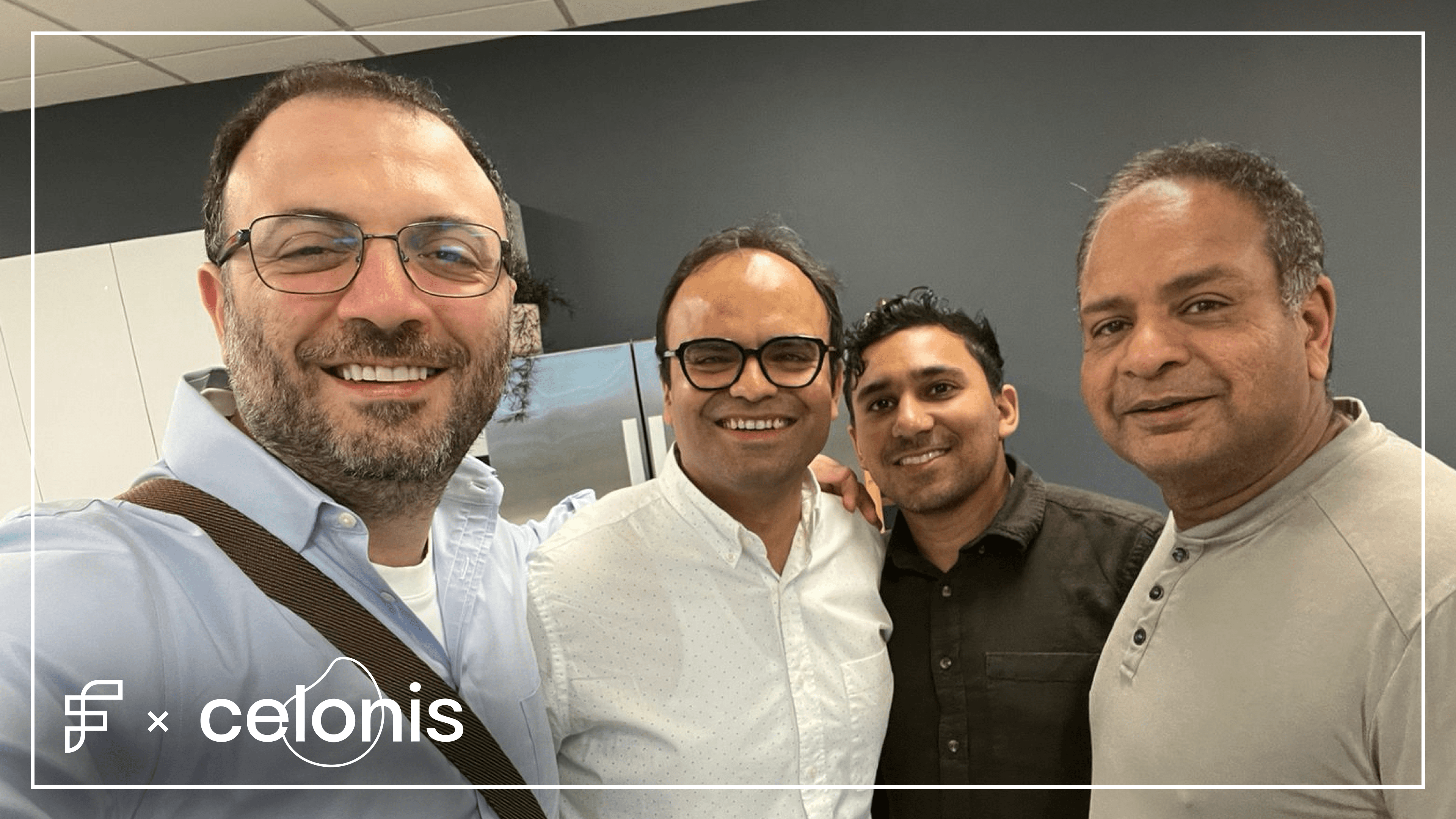
Context graphs, made real: Celebrating Ikigai’s acquisition by Celonis

Posted

0 MIN READ
0 MIN READ

Show Outline

I’m proud to announce that our portfolio company Ikigai, creator of a foundation model for structured data and time-series forecasting, has been acquired by Celonis, a leader in process intelligence, which recently launched its own Context Model. Sometimes, with an acquisition, one plus one equals not two, but eleven, and that’s most certainly the case here.

Meeting the Ikigai team

When we led Ikigai's seed round in summer 2021, we knew we had found a very special team. Co-founded by MIT professor Devavrat Shah and his former student Vinayak Ramesh, Ikigai is built on Large Graphical Models (LGMs): a class of foundation model purpose-built for the structured, time-series data that runs businesses at scale. This includes inventory tables, transaction logs, and operational signals that LLMs were never designed to reason over. 

LGMs draw on two decades of Devavrat's research at MIT into the mathematics of how relationships hide inside messy, multi-source data, and how those relationships can be recovered, modeled, and predicted automatically. In practice, that means Ikigai takes on the slow, code-heavy work of joining and transforming data across disparate systems—the kind of work that has historically required entire teams of data engineers—and delivers it through a spreadsheet-like interface that requires no programming skills to use.

Consider demand forecasting, which is one of Ikigai's main use cases. Several of Ikigai's customers are global consumer goods retailers that manage multinational supply chains and sell products in a variety of colors and sizes, both in retail stores and online. To predict demand for their thousands of SKUs, these retailers need to model a web of contingencies, like how a rainy weekend might shift in-store sales to online in one region, or how a new color release might cannibalize sales of an existing product line.

Ikigai is designed to handle this kind of complexity at scale. A single customer's environment can involve millions of time series interacting with each other. Ikigai's LGM technology lets retailers forecast and plan accordingly—organizing production and distribution to meet customer demand with precision. What used to take months of manual work, Ikigai compresses into minutes.

Our partnership

At Foundation, we invest in deeply technical founders at the earliest stages of their journey, and we work shoulder-to-shoulder with them through the long arc of company-building.

Ikigai is a prime example of the kind of founder we most like to build alongside. I first met Vinayak in 2018, and he introduced me to Devavrat. Devavrat and Vinayak had created an incredible technology, but they needed to find their market and figure out how to grow into it.

I helped introduce Ikigai to one of their biggest customers and stayed in the room with them through the 18 months it took to go from first meeting to final contract. When it came time to build out their go-to-market team, I worked closely with Devavrat to recruit AEs, SEs, and a GTM lead. Figuring out the right GTM model for disruptive technology is rarely a straight line, and we worked hand-in-glove to iterate on both the strategy and the team. Along the way, Devavrat and I became true friends. We’ve had countless great conversations on walks, and dinners at both my place and his. We’ve gotten to know each other’s families.

One of Devavrat’s references was Ion Stoica, the founding CEO of Databricks, which was one of my personal seed investments. He told me that Devavrat was exceptional. After getting to know Devavrat over the past eight years, I couldn’t agree more. Not only is Devavrat one of the smartest people I’ve ever met (as his long list of awards and prizes will tell you), he also has strong commercial instincts: a sharp sense for how and where value gets captured, not just where great technology can be applied. It's a rare combination in a technical founder, and it's part of what makes him a magnet for the kind of serious technical talent who want to solve real-world problems.

Where one plus one equals eleven

Many of the biggest market opportunities for enterprise AI—and the stickiest ones—are mission-critical problems. Supply chains and distribution channels are key examples. Because solving these issues is so essential, every business already has a solution, however imperfect it may be. Selling them a new solution, even if it’s a step-function more efficient and more accurate, can be a long process that requires deep industry knowledge, integrations to existing systems, and trust that takes time to build up.

That’s why Ikigai and Celonis are so well-matched. Each brings something to the table that makes them stronger as a team. Celonis has a world-class data platform and a breadth of existing customer relationships that will accelerate the deployment of Ikigai into a variety of use cases—currently their customers span industries from manufacturing to medicine, and more. Celonis can help Ikigai kickstart those conversations, leading to greater distribution and impact.

Through their process intelligence platform, Celonis has built a deep operational understanding of how enterprises actually function: a live model of how work happens, why it breaks, and what should happen next. With the acquisition of Ikigai, they’ve added the decision intelligence and simulation capabilities that take it to the next level. Combined, they have all the ingredients to make our context graph thesis real. We’re in the AI-era version of process intelligence, and the companies that control the context layer will define the next era of enterprise software. 

I’m excited to see what they do next together.

Get insights directly to your inbox.

Set your newsletter preferences:

Set your newsletter preferences:

Posted

0 MIN READ

Show Outline

I’m proud to announce that our portfolio company Ikigai, creator of a foundation model for structured data and time-series forecasting, has been acquired by Celonis, a leader in process intelligence, which recently launched its own Context Model. Sometimes, with an acquisition, one plus one equals not two, but eleven, and that’s most certainly the case here.

Meeting the Ikigai team

When we led Ikigai's seed round in summer 2021, we knew we had found a very special team. Co-founded by MIT professor Devavrat Shah and his former student Vinayak Ramesh, Ikigai is built on Large Graphical Models (LGMs): a class of foundation model purpose-built for the structured, time-series data that runs businesses at scale. This includes inventory tables, transaction logs, and operational signals that LLMs were never designed to reason over. 

LGMs draw on two decades of Devavrat's research at MIT into the mathematics of how relationships hide inside messy, multi-source data, and how those relationships can be recovered, modeled, and predicted automatically. In practice, that means Ikigai takes on the slow, code-heavy work of joining and transforming data across disparate systems—the kind of work that has historically required entire teams of data engineers—and delivers it through a spreadsheet-like interface that requires no programming skills to use.

Consider demand forecasting, which is one of Ikigai's main use cases. Several of Ikigai's customers are global consumer goods retailers that manage multinational supply chains and sell products in a variety of colors and sizes, both in retail stores and online. To predict demand for their thousands of SKUs, these retailers need to model a web of contingencies, like how a rainy weekend might shift in-store sales to online in one region, or how a new color release might cannibalize sales of an existing product line.

Ikigai is designed to handle this kind of complexity at scale. A single customer's environment can involve millions of time series interacting with each other. Ikigai's LGM technology lets retailers forecast and plan accordingly—organizing production and distribution to meet customer demand with precision. What used to take months of manual work, Ikigai compresses into minutes.

Our partnership

At Foundation, we invest in deeply technical founders at the earliest stages of their journey, and we work shoulder-to-shoulder with them through the long arc of company-building.

Ikigai is a prime example of the kind of founder we most like to build alongside. I first met Vinayak in 2018, and he introduced me to Devavrat. Devavrat and Vinayak had created an incredible technology, but they needed to find their market and figure out how to grow into it.

I helped introduce Ikigai to one of their biggest customers and stayed in the room with them through the 18 months it took to go from first meeting to final contract. When it came time to build out their go-to-market team, I worked closely with Devavrat to recruit AEs, SEs, and a GTM lead. Figuring out the right GTM model for disruptive technology is rarely a straight line, and we worked hand-in-glove to iterate on both the strategy and the team. Along the way, Devavrat and I became true friends. We’ve had countless great conversations on walks, and dinners at both my place and his. We’ve gotten to know each other’s families.

One of Devavrat’s references was Ion Stoica, the founding CEO of Databricks, which was one of my personal seed investments. He told me that Devavrat was exceptional. After getting to know Devavrat over the past eight years, I couldn’t agree more. Not only is Devavrat one of the smartest people I’ve ever met (as his long list of awards and prizes will tell you), he also has strong commercial instincts: a sharp sense for how and where value gets captured, not just where great technology can be applied. It's a rare combination in a technical founder, and it's part of what makes him a magnet for the kind of serious technical talent who want to solve real-world problems.

Where one plus one equals eleven

Many of the biggest market opportunities for enterprise AI—and the stickiest ones—are mission-critical problems. Supply chains and distribution channels are key examples. Because solving these issues is so essential, every business already has a solution, however imperfect it may be. Selling them a new solution, even if it’s a step-function more efficient and more accurate, can be a long process that requires deep industry knowledge, integrations to existing systems, and trust that takes time to build up.

That’s why Ikigai and Celonis are so well-matched. Each brings something to the table that makes them stronger as a team. Celonis has a world-class data platform and a breadth of existing customer relationships that will accelerate the deployment of Ikigai into a variety of use cases—currently their customers span industries from manufacturing to medicine, and more. Celonis can help Ikigai kickstart those conversations, leading to greater distribution and impact.

Through their process intelligence platform, Celonis has built a deep operational understanding of how enterprises actually function: a live model of how work happens, why it breaks, and what should happen next. With the acquisition of Ikigai, they’ve added the decision intelligence and simulation capabilities that take it to the next level. Combined, they have all the ingredients to make our context graph thesis real. We’re in the AI-era version of process intelligence, and the companies that control the context layer will define the next era of enterprise software. 

I’m excited to see what they do next together.

Get insights directly to your inbox.

Set your newsletter preferences:

Get insights directly to your inbox.

Set your newsletter preferences:

Set your newsletter preferences: